Project
NAWAPA
America is facing a serious crisis in water management. Every summer the same stories come back. The Colorado River runs dry in the Mexican desert before it reaches the sea. Lake Mead drops far enough to show a white ring ten stories high, and the marina ramps end in mud. Arizona stops approving new subdivisions around Phoenix because the groundwater under them is already spoken for. Farmers watch their canals run dry while the government pays other farmers to let their fields go brown. Las Vegas tears out its lawns. The Great Salt Lake shrinks toward a bed of dust.
Every one of those stories offers the same choice: houses or alfalfa, cities or farms. The only plans on the table decide who goes without first.
What the stories never say is that the answer to all of them was drawn up in 1964, in a country that was breaking ground on nuclear plants, designing desalination plants, and five years from putting men around the Moon. Its engineers took it for granted that the next job was to move the river runoff of the North to the deserts of the South.
They called it the North American Water and Power Alliance, NAWAPA. It has sat on a shelf for sixty years. Diane Sare is running for President to build it.
What Is NAWAPA?
North America has more fresh water than any continent on earth. It runs the wrong way. The biggest rivers flow north into the Arctic Ocean, where almost no one lives, while the farmland and cities in the south run dry. The rivers of Alaska and northern Canada pour more fresh water into the sea every year than the whole American West uses.
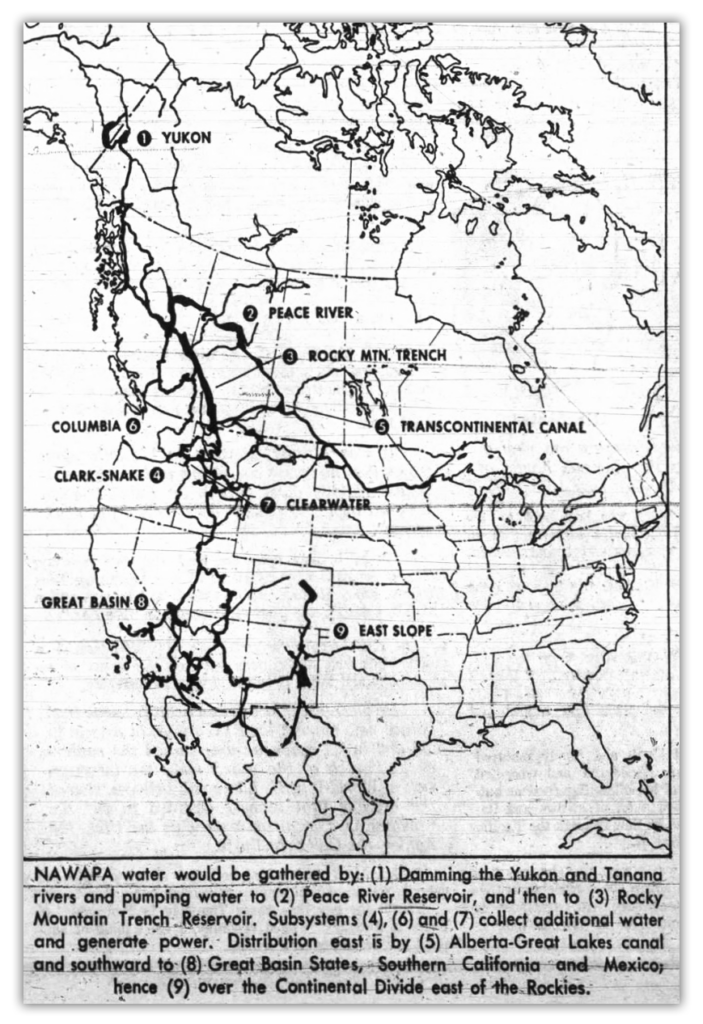
NAWAPA catches a share of that water before it reaches the ocean and sends it south, by gravity, to every dry basin on the continent.
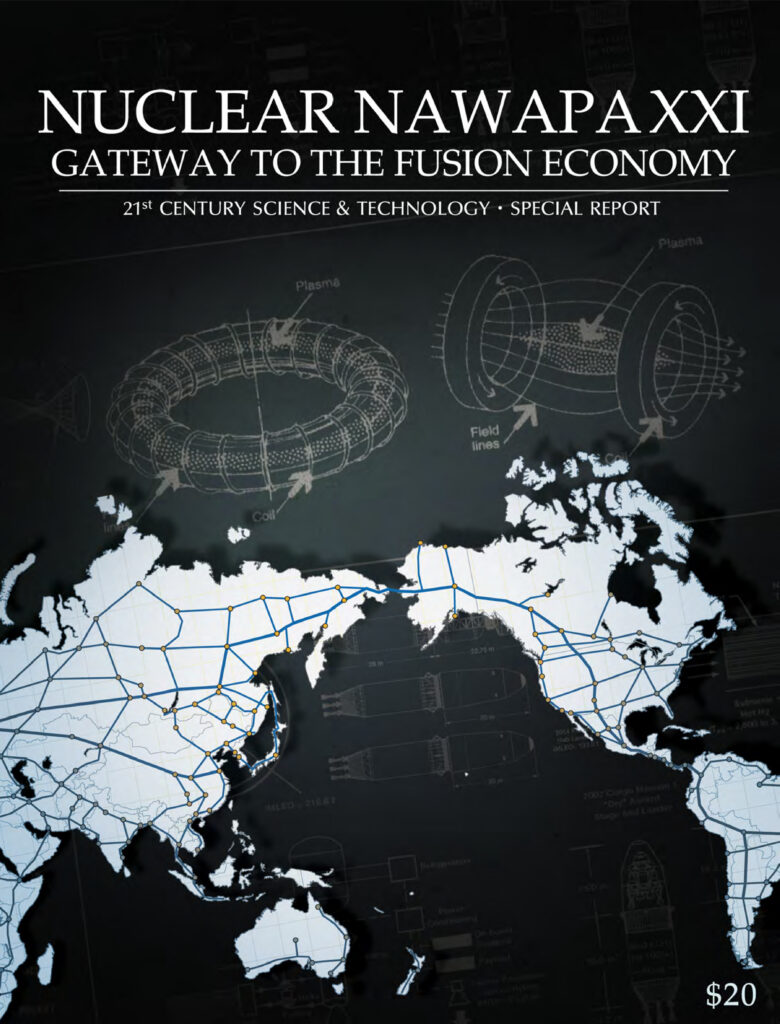
One reservoir in the Rocky Mountains of British Columbia will be high enough that water runs downhill from it to the Great Lakes in one direction and to the Colorado River, California and northern Mexico in the other. In the 1964 plan, the falling water made the electricity to pump water uphill where it had to climb. The 2013 redesign, Nuclear NAWAPA XXI, puts nuclear reactors at the four pumping stations instead. The reactors do the pumping, and all the power from the falling water is left over to sell. It is a second river system for the continent.
What President Sare Will Do
The plan is sixty-two years old. Congress barred federal engineers from studying it in 1968, and no one has tried since the ban ran out. Diane Sare will reopen the file in her first 100 days in office and break ground in her first term.
1. Reopen the file. Direct the Bureau of Reclamation and the Army Corps of Engineers to update the 1964 inventory of 369 works to today’s terrain, population and technology, and report within a year. It will be the first federal study of continental water transfer since Congress banned them.
2. Seat the partners. Invite Canada and Mexico to a three-nation treaty commission with equal seats. The treaty sets each nation’s share of the water and the power before a shovel moves. Alberta, Saskatchewan and Sonora are written in as recipients, not sources.
3. Build the power first. Order new reactors at the seventeen nuclear sites that were licensed and prepared for more units and never got them, and nuclear desalination plants on the California and Texas coasts. The coast cities get water while the mountain works are surveyed.
4. Pay for it with national credit. Restore Glass-Steagall and charter a national bank to issue the long-term credit, the way Lincoln and Roosevelt financed their public works. The power sales and water contracts repay it.
5. Put the factories back to work. Retool the idle auto and aerospace plants of Michigan, Ohio and Indiana to make the pumps, pipe, turbines and reactor parts, and train the welders, operators and engineers to run them.
If this plan is enacted, there will be more water in the Colorado within fifteen years.
Water for a Hundred Years
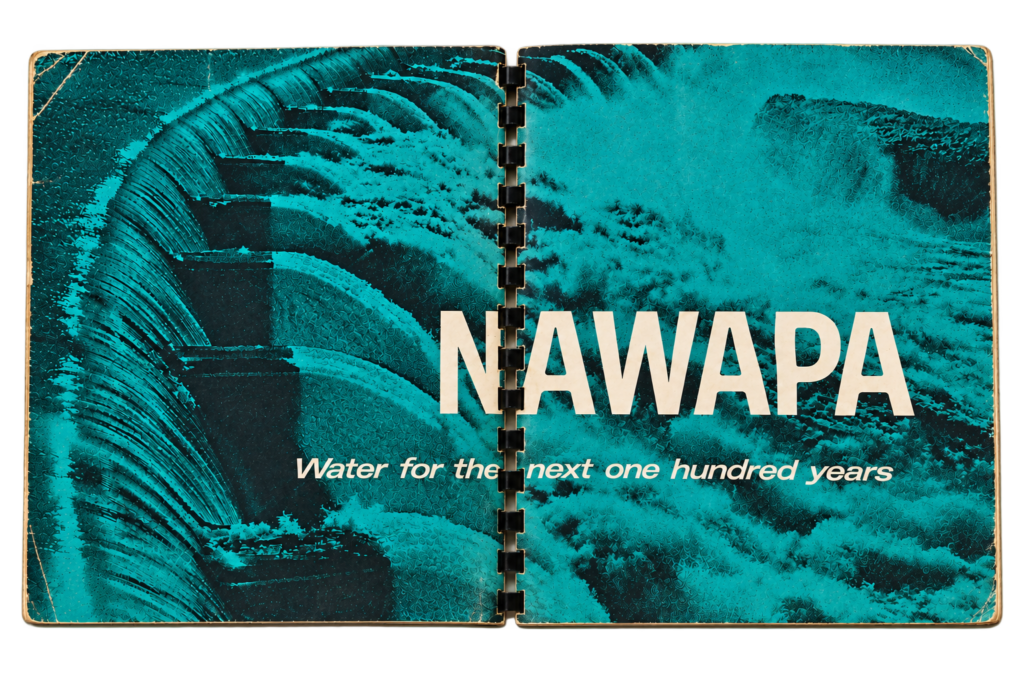
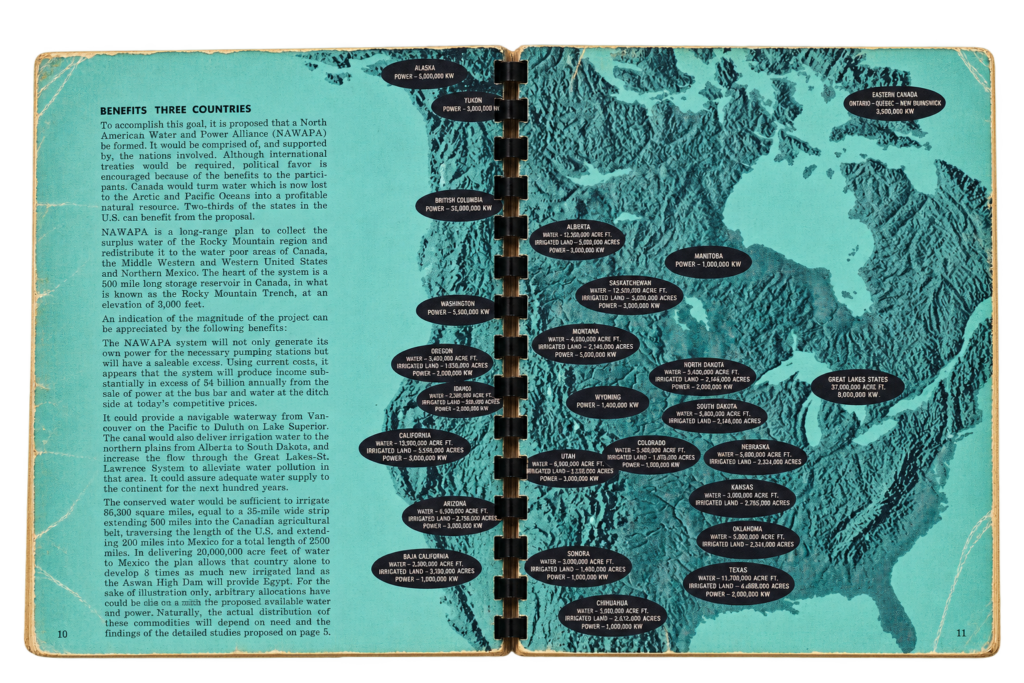
Parsons put the delivery at 120 million acre-feet a year: 78 million to the United States, 22 million to Canada, 20 million to Mexico. The brochure called it enough “to assure adequate water supplies for the next one hundred years or more.” The Colorado River has carried an average of 12.4 million acre-feet a year since 2000. NAWAPA gives the United States six Colorado Rivers and delivers them to the basins the Colorado never reaches: the Great Basin, the High Plains, the Rio Grande and the Great Lakes.
Forty Million Acres
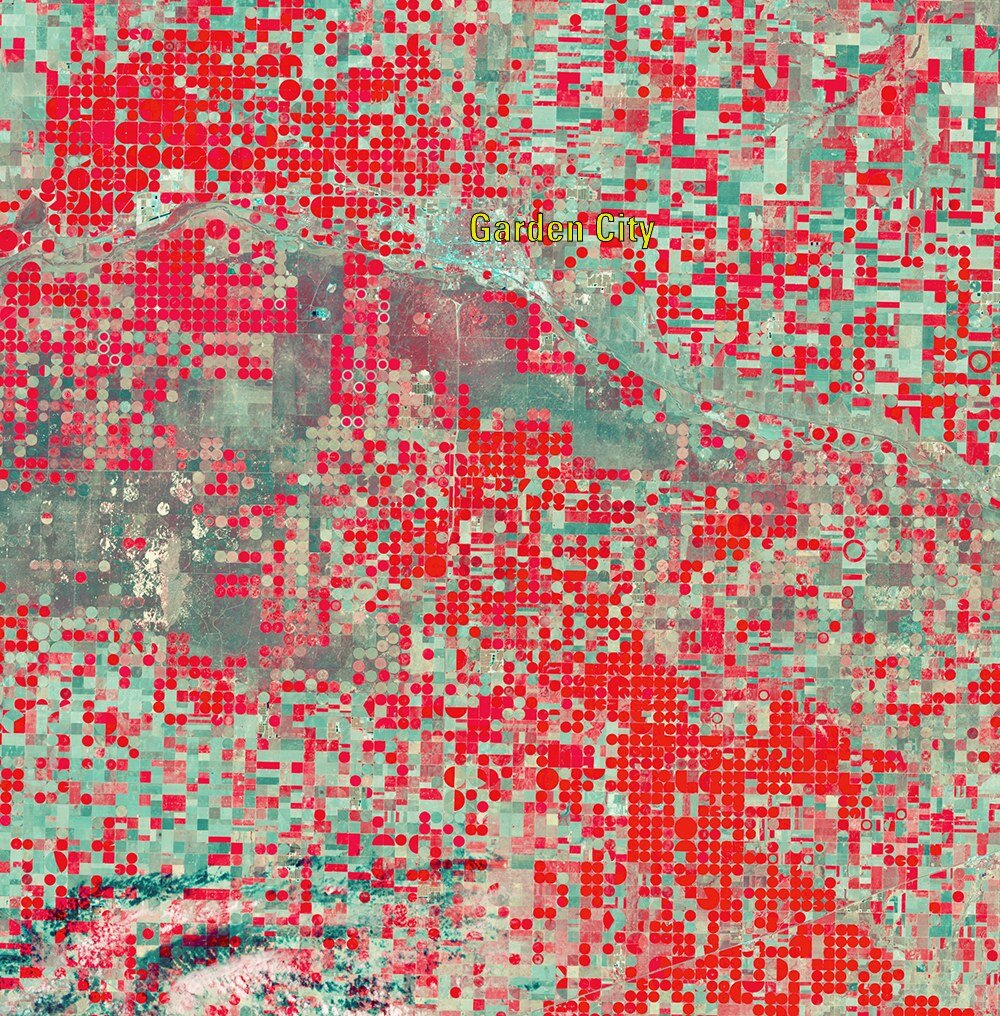
The brochure counted 40 million new irrigable acres in the United States. The Senate print drew it as a strip of farmland 35 miles wide and 2,500 miles long, from the Canadian wheat belt across the whole country and 200 miles into Mexico. The circles in this picture are Kansas farms pumping the Ogallala aquifer, which has lost 286 million acre-feet since pumping began and does not refill. The plan’s canal across the High Plains replaces those pumps with river water and keeps the circles green after the aquifer is gone. The same water grows more in the South than in the North: measured by photosynthesis, a cubic kilometer of river water in the Southwest produces five and a half times what it does in Alaska.
Power to Sell
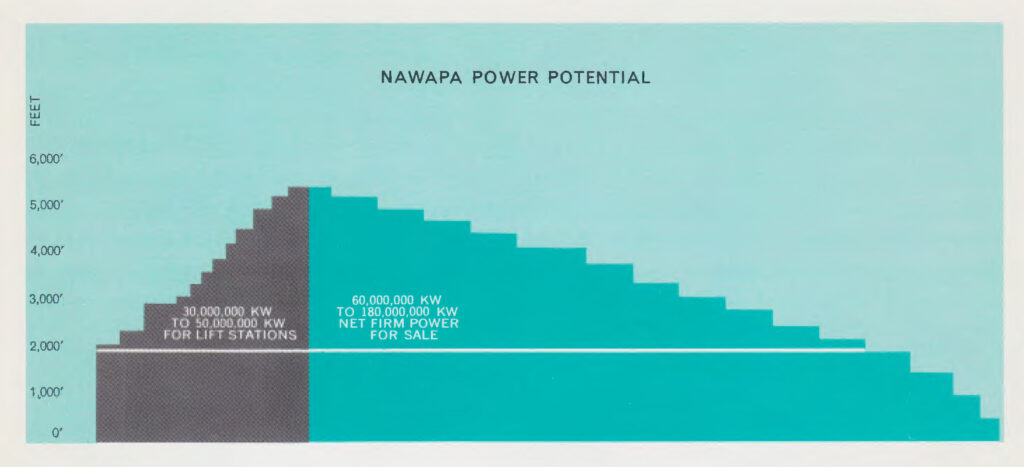
Water falling out of the Trench makes electricity. The 1964 plan used 30 million kilowatts of it for pumping and sold the other 70 million: 38 million in the United States, 30 million in Canada and 2 million in Mexico. The new flow also steadies Niagara and the Columbia, whose output now rises and falls with the snowpack. The 2013 redesign, Nuclear NAWAPA XXI, puts 52 million kilowatts of reactors at the four pump lifts instead, so no river water is spent lifting river water, and every acre-foot collected reaches a field or a city.
The Great Lakes Full, and a Seaway to Alberta
A canal from Alberta carries more than 40 million acre-feet a year into Lake Superior. That holds the Great Lakes at a set level, lets ships leave Great Lakes ports fully loaded, dilutes the pollution the Senate print was already worried about in 1964, and steadies the power at Niagara. The canal is built to ship size, so ocean vessels run from the St. Lawrence to central Alberta. A second canal joins Lake Huron to Hudson Bay, and a waterway runs from Vancouver to Duluth. The prairie’s grain, potash, iron ore and coal move by water.
Partners, Not Sources
Parsons wrote the rule in 1964: “No area will have water taken from it except that which is now, or in the foreseeable future, going to waste,” and the supplying area is paid in power or revenue. Alberta and Saskatchewan each receive 12.5 million acre-feet a year, more than Texas. Sonora receives 12.3 million, and Mexico’s irrigable land triples, eight times what the Aswan High Dam gave Egypt. Canada earns $2 billion a year, in 1964 dollars, from water, power and tolls. Senator Moss told Ottawa that a mineral is gone once it is delivered, and “your water will be there next year.”
A Second River System
The reservoir in the Rocky Mountain Trench is 500 miles long and sits 3,000 feet up, high enough that the water runs by gravity east to the Great Lakes and south to Mexico. The ice age left North America’s rivers running north into the Arctic. The plan turns a share of them south, the way the Dutch built their land out of the sea. The new reservoirs and irrigated fields also put water back into the air. About 40 percent of the rain that falls on a continent evaporated from that continent’s own land, so the canals make rain in the dry West as well as carrying it. Kennedy asked Congress in 1961 for river-basin plans covering the whole nation. NAWAPA was the answer at continental scale.

The Factories Come Back
Parsons priced the work at $3 to $4 billion a year of American engineering, steel and supply over twenty years, and a $30 billion a year rise in national income from farms, mines and factories, in 1964 dollars. The 2013 redesign lists the work: pumps, pipe, turbines and reactor vessels from retooled auto plants; 28 reactors at the 17 nuclear sites already prepared for more units; 42 nuclear desalination plants on the coasts; and a training program for the welders, machinists and engineers. Its authors count 17 million jobs across the two phases of the build.
Why It Stopped
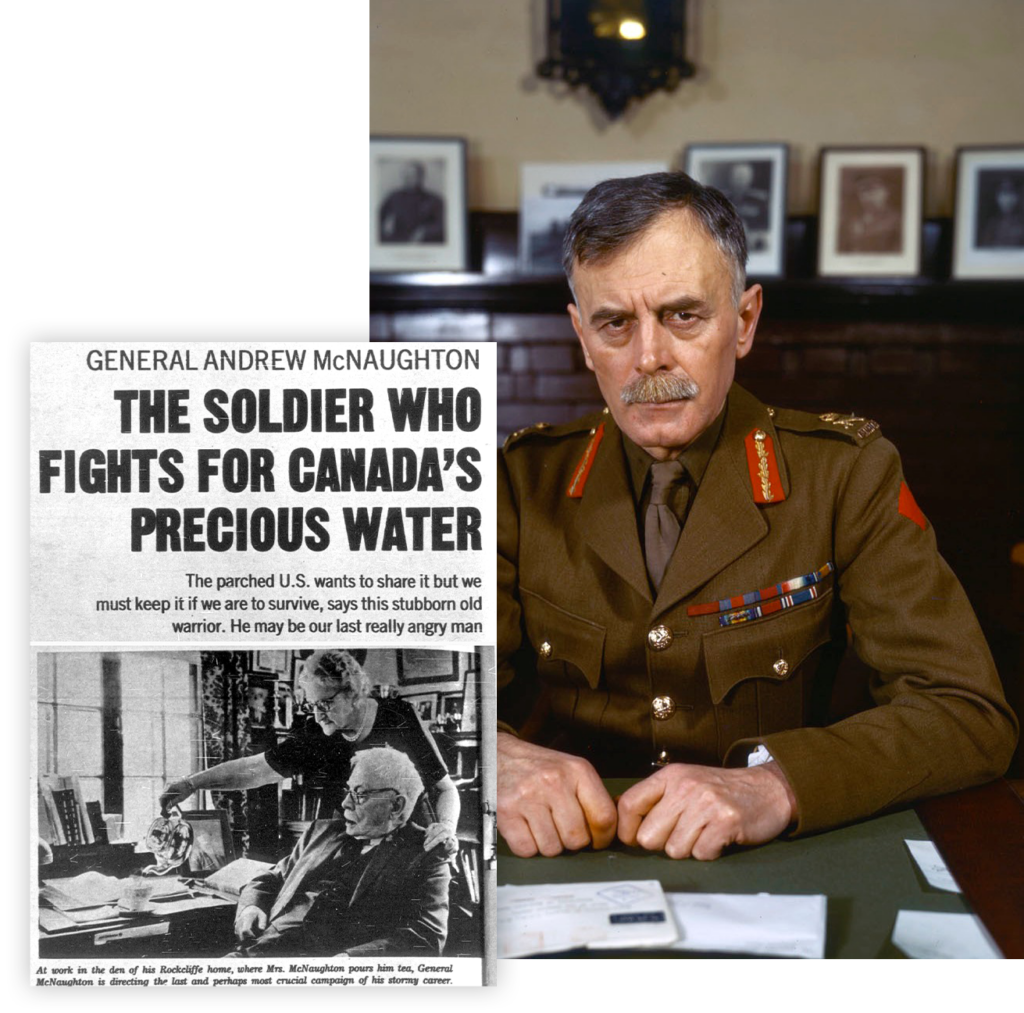
Canada’s objection came first. In 1966 General Andrew McNaughton, who had chaired the International Joint Commission, called the plan “a diabolic thesis” at the Royal Society of Canada, and Ottawa went cold. Then Vietnam took the 1965 budget. In September 1968 Congress wrote into the Colorado River Basin Project Act that for ten years no federal official could study importing water into the Colorado basin, and renewed the ban through 1988. No agency has reopened the file since. The Fusion Energy Foundation brought the plan back at a Los Angeles conference in October 1980, which Marc Reisner records in Cadillac Desert, and the LaRouche movement redrew it in 2010 and 2013. Nobody said it couldn’t be built.
Diane Sare Reopens the File
Diane Sare first ran on NAWAPA in 2011, as a candidate for Congress in New Jersey. She ran on it for the Senate in 2022. She is running on it for President. Senator Moss said in 1965 that the plan might take fifty years or a hundred to build. The first sixty-two were spent waiting for someone to start.