Project
International Lunar Research Station
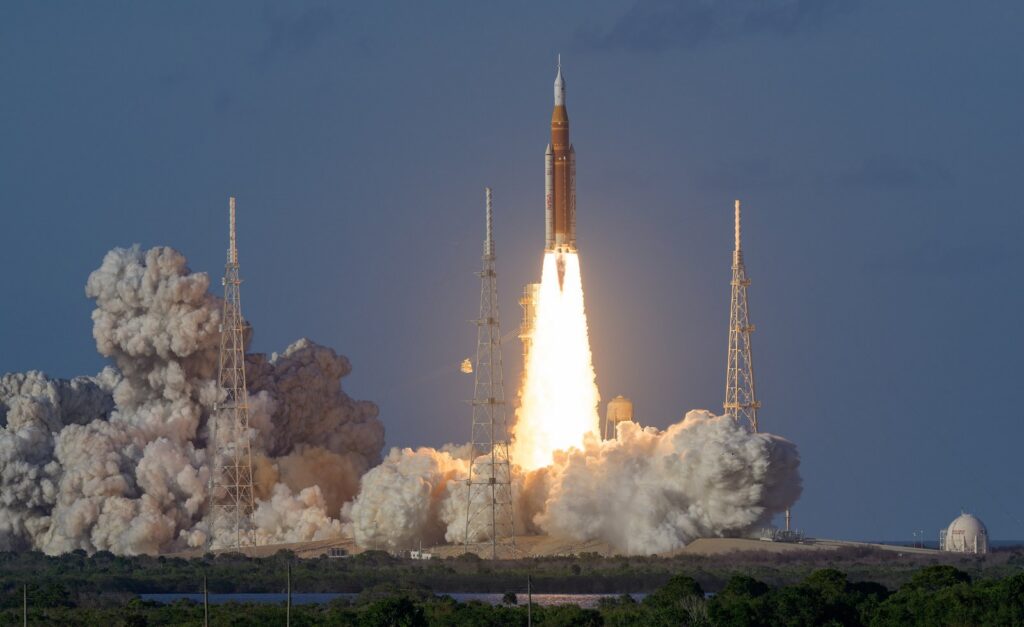
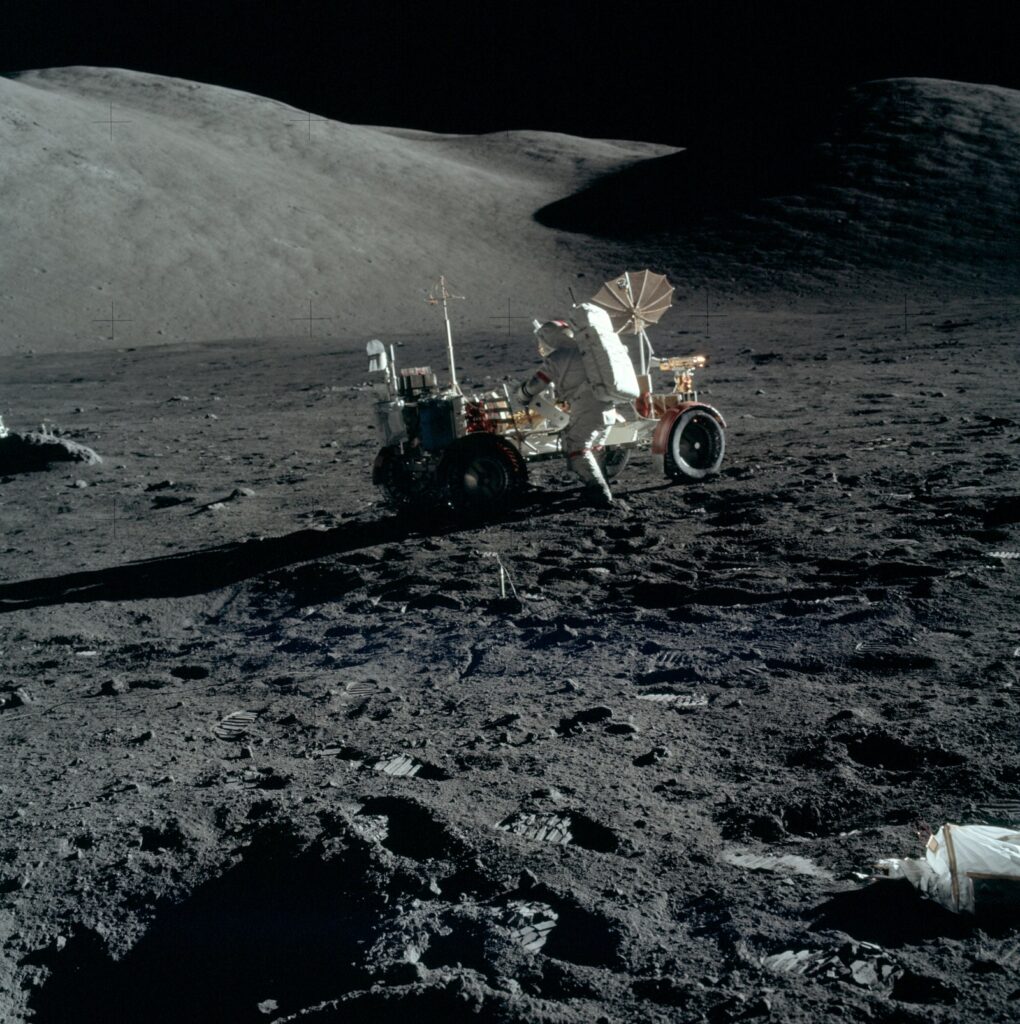
The last Americans, and the last human beings to walk on Moon did so in 1972, and we haven’t been back since. What happened?
When the Moon is treated as important, it’s as a race: China against America, their station against Artemis, the new date against the old one. The argument for funding NASA has become the argument for beating China.
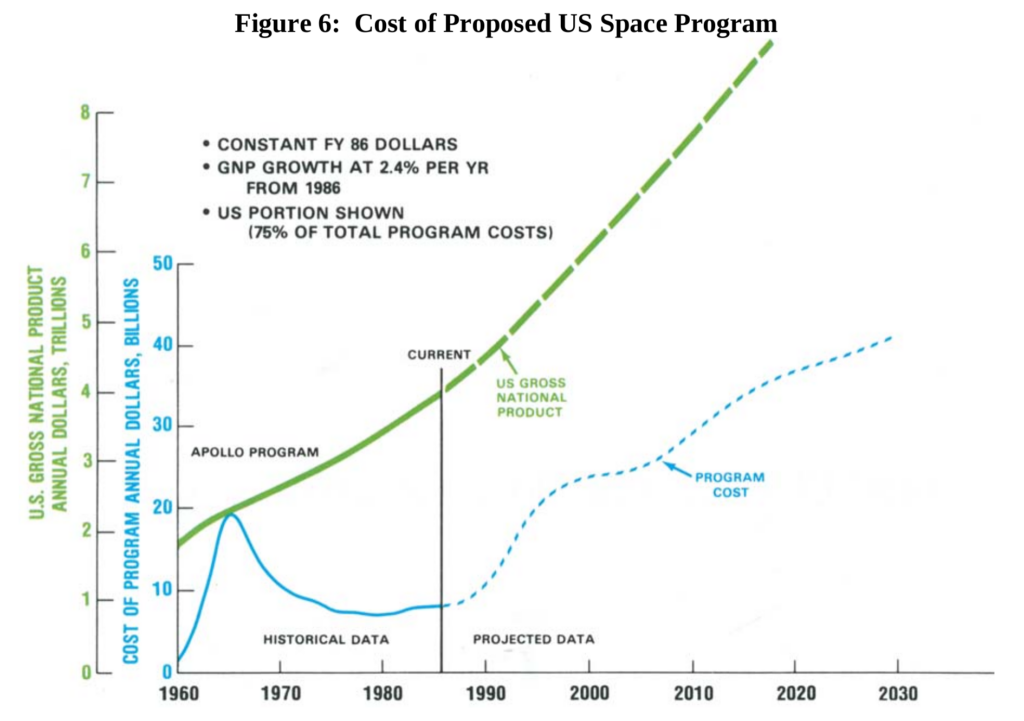
A different plan was written forty years ago. In 1986 a presidential commission chaired by Thomas Paine, who ran NASA during Apollo, put dates on the Moon and Mars: a lunar outpost by 2005, lunar manufacturing by 2018, a Mars base by 2027, at less than half of what Apollo had cost as a share of the economy. The next year a presidential candidate put a fusion economy under it. Three presidents since have announced a return to the Moon, but each time NASA’s share of the budget stayed under a quarter of what it was for Apollo.
Diane Sare will carry out that plan. In her first budget, NASA returns to one percent of federal spending, where it was the last time the country built something new in space. In her first month in office, she will ask Congress to repeal the 2011 law that bars NASA from working with China. She invites the thirteen countries building the International Lunar Research Station and the seventy-six in the Artemis Accords to negotiate one station at the Moon’s south pole by 2035, run as a single project with the fusion crash program.
What Is the Lunar Research Station?
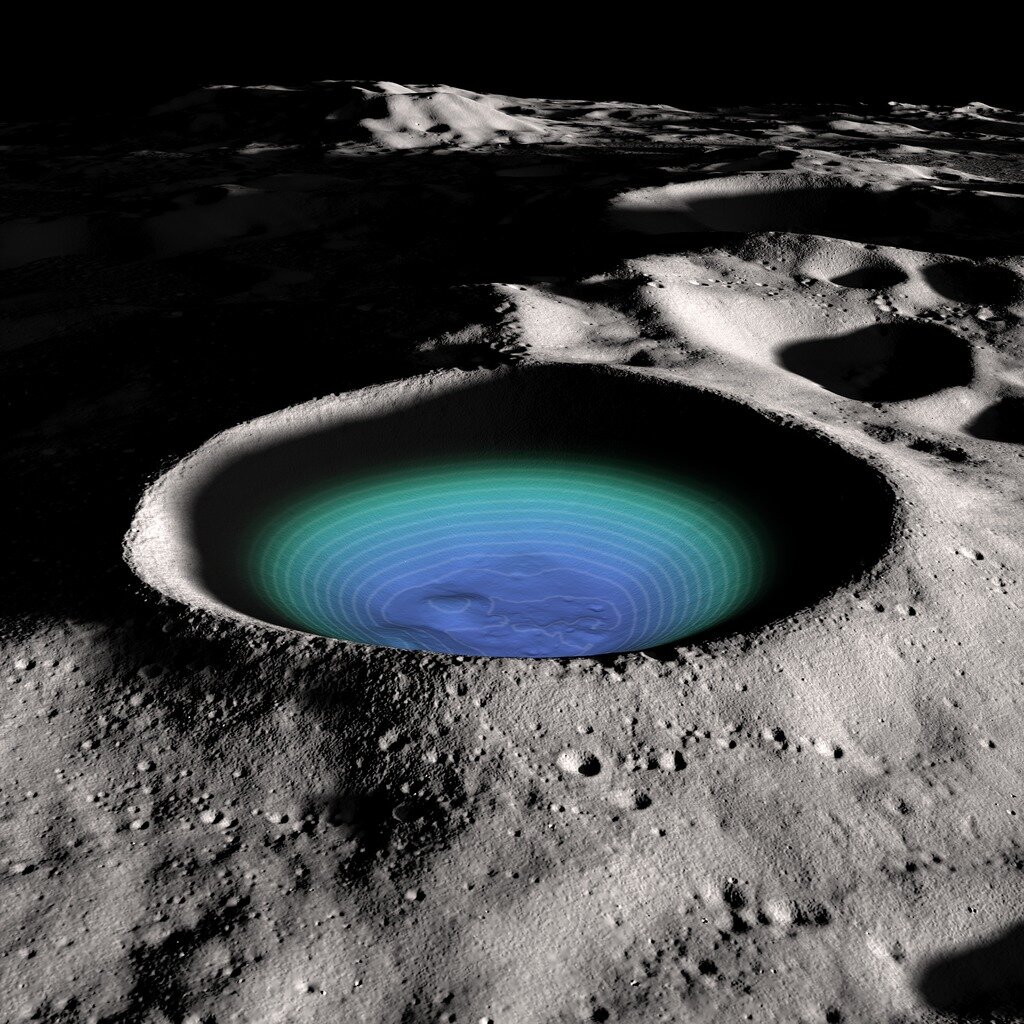
A permanent, crew-tended research base at the Moon’s south pole, where sunlight is nearly continuous on the crater rims and water ice sits in the permanently shadowed floors beside them. One is planned for construction already. China and Russia signed the memorandum for the International Lunar Research Station in March 2021 and published its roadmap that June. Thirteen countries have joined. China’s Chang’e-7 flies to the south pole in 2026 to look for the ice, Chang’e-8 in 2028 will test building with the soil, the basic station is due in 2035 and an expanded one in 2045.
NASA’s Artemis program plans to land crews in the same region, at nine candidate sites within six degrees of the pole, in 2028. Seventy-six countries have signed the Artemis Accords with the U.S. instead of the International Lunar Research Station. Three have signed both. The Wolf Amendment, in place since 2011, bars NASA from working with China at all.
What Diane Sare Will Do
Fund NASA. One percent of the federal budget, in the first budget she sends to Congress. It was 4.4 percent in 1966, 1 percent through the 1990s, and is 0.4 percent today. Every return to the Moon announced since 1989 was announced at under a quarter of the Apollo share, and every one failed.
Repeal the China ban. Section 1340 of the 2011 appropriations act forbids NASA to “participate, collaborate, or coordinate bilaterally in any way with China,” and Congress has renewed it every year since. Diane Sare will ask for its repeal and will not sign a NASA appropriation that carries it.
Build one station. The campaign will invite the ILRS partners and the Artemis Accords partners to negotiate a single station at the south pole by 2035, where both programs are already going. Thailand, Serbia and Senegal have signed both agreements; Diane Sare will expand that list and propose that countries who have committed to both projects will host the first meeting.
Run it with the fusion program. The fusion crash program and the lunar station are one program. The reactors power the station. The station’s first industrial job is a propellant plant and a pilot plant to gather the lunar soil’s helium-3, the fuel for the second generation of nuclear fusion reactors.
Publish the schedule. In her first year Diane Sare will publish a national schedule for the Moon and Mars in the form the 1986 commission used: outpost, propellant plant, spaceport, lunar manufacturing, then Mars, each with a date, and report to Congress every year on where the country stands against it. The chart below shows that schedule; the red line is today.
Why the Moon
Krafft Ehricke, who came to America with Wernher von Braun’s team and designed the Centaur upper stage, called the Moon the first industrial site off the Earth. It sits at the top of Earth’s gravity well, with a sixth of the gravity and no atmosphere, which makes it the cheapest place within reach to build and launch from. Its soil holds oxygen for propellant and metals for structures, its polar ice holds hydrogen, and its far side, shielded from Earth’s radio noise, is an excellent location for radio astronomy. The 1986 schedule puts the outpost first for that reason, and then a propellant plant, a lunar spaceport, lunar manufacturing, and Mars, with the ships built from lunar material instead of lifted from Earth. The commission called it the creation of new wealth rather than the management of scarcity.
The soil also holds helium-3, the fuel for a second generation of fusion reactors that produce energy without making neutrons, simplifying the design. Twenty-five tons of helium-3, which could fit in the Space Shuttle’s cargo bay, carries enough potential energy to supply one year of U.S. electricity consumption. The reactors power the station, and the station harvests the fuel of the future.
Below is the schedule as the commission printed it in 1986, with today marked in red.
The 1986 Schedule
Thomas Paine, who ran NASA during Apollo 11, chaired the commission. Its report was finished days after Challenger and published in May 1986. It gave dates: an orbital spaceport by 2000, a crewed lunar outpost by about 2005, a pilot propellant plant on the Moon by 2007, a lunar spaceport by 2013, lunar manufacturing by 2018, a crewed Mars outpost by 2015, and a full Mars base by 2027, with the whole program staying under half the Apollo share of the economy through 2035.
The report’s reason for the dates: “Historically, wealth has been created when the power of the human intellect combined abundant energy with rich material resources. Now America can create new wealth on the space frontier.” And under the cost curve at the end: “The emphasis is upon the creation of new wealth rather than the management of scarcity. We are not proposing to flee mother Earth, but to improve it by removing limits to human growth.”
Diane Sare’s program adopts that sequence, outpost first and Mars last, as the national schedule.
What Comes Off the Moon
The commission called the Moon “a tank farm in space.” Oxygen is 40 percent of the lunar soil by weight, and a rocket engine burns six pounds of oxygen for every pound of hydrogen, so oxygen made on the Moon is six-sevenths of the propellant for a ship that is already at the top of Earth’s gravity well. The soil is 20 percent silicon, for solar arrays, 14 percent aluminum and 4 percent iron, with titanium, magnesium and chromium behind them. The hydrogen is the ice in the shadowed craters at the pole. The commission listed propellant and radiation shielding as the first products and compared the first shipment to Earth orbit to “the driving of the Golden Spike in Utah.”
Krafft Ehricke spent his last fifteen years designing the industrial Moon. His argument was that the Moon has no biosphere to protect, so the large, hot, dirty processes that are restricted on Earth can run there. LaRouche’s 1987 program added fusion power on the Moon: “more than 90 percent of the total weight of large space-vessels could be produced on the Moon,” and the ships for Mars would be built there instead of lifted from Earth.
Diane Sare’s lunar station starts that industry in the commission’s order: the propellant plant, then the spaceport, then manufacturing.
The Fuel
The lunar soil holds helium-3, deposited by the solar wind over four billion years. Fused with deuterium it gives off almost no neutrons, so the reactor does not become radioactive and its energy can be converted to electricity directly. In 1986 the Fusion Technology Institute at the University of Wisconsin estimated about a million tons of it on the Moon and calculated that mining and shipping it would cost about one 250th of the energy it returns. Twenty-five tons, the volume of one Shuttle cargo bay, would have supplied all the electricity the United States used in 1991, which put its value at about $2 billion a ton. Harrison Schmitt, the geologist who walked on the Moon on the last Apollo mission, co-wrote the studies.
The fusion crash program on this site and the lunar station are one program. The first generation of reactors burns deuterium and tritium made on Earth. The second burns helium-3 from the Moon. The reactors power the station, and the station mines their fuel.
What It Does to American Industry
The commission’s first listed benefit was “pulling through” technology. Its example was the war: jet propulsion, antibiotics, synthetic rubber, radar, nuclear energy and the electronic computer were developed for military use and became “America’s high growth industries of the 1960s and 1970s.” Its list for the space program: robotics and process automation, hypersonic flight, high-temperature materials, supercomputers, hydrogen-oxygen vehicles, and closed-ecology life support, “which could revolutionize intensive agriculture.”
LaRouche’s 1987 program went further on the Moon itself. Making metal there without burning oxygen means reducing ore to plasma and handling it with magnetic fields, the methods of the fusion laboratory, and that requires new ceramics, laser machine tools and electromagnetic isotope separation. Written as a look back from the 2020s, the program says “many of these benefits were the direct result of using the new space technologies in everyday production back on Earth.” He wrote it in a decade when household income had fallen and whole industries had closed, and said the project “was seen as a way of helping to revive a decaying economy.”
Diane Sare’s program spends NASA’s one percent on the plants, tools and materials that have to be invented to work on the Moon and are then used here.
What We Learn There
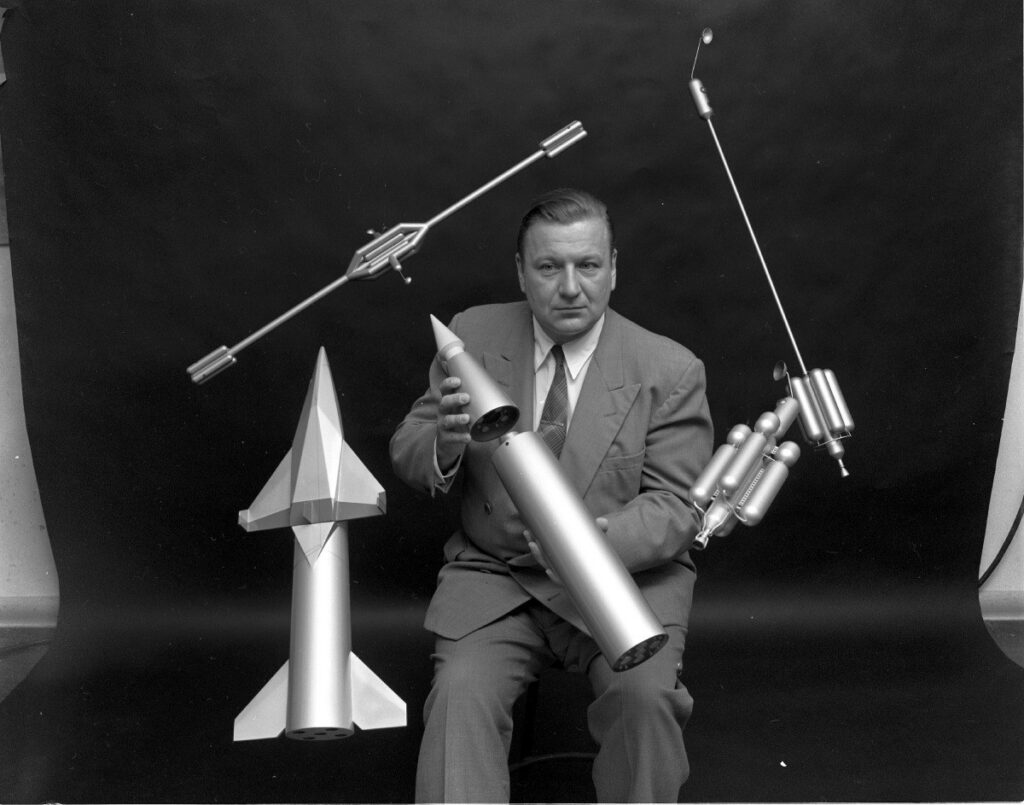
The far side of the Moon is shielded from Earth’s radio noise “by 2,000 miles of rock,” the commission wrote, so a radio telescope there hears the universe without interference from Earth. The Moon is nine to ten times quieter seismically than the Earth, which suits gravitational-wave detectors; its long cold nights suit infrared telescopes; and the commission called it the laboratory for everything farther out, where the life support and medicine for long voyages would be worked out.
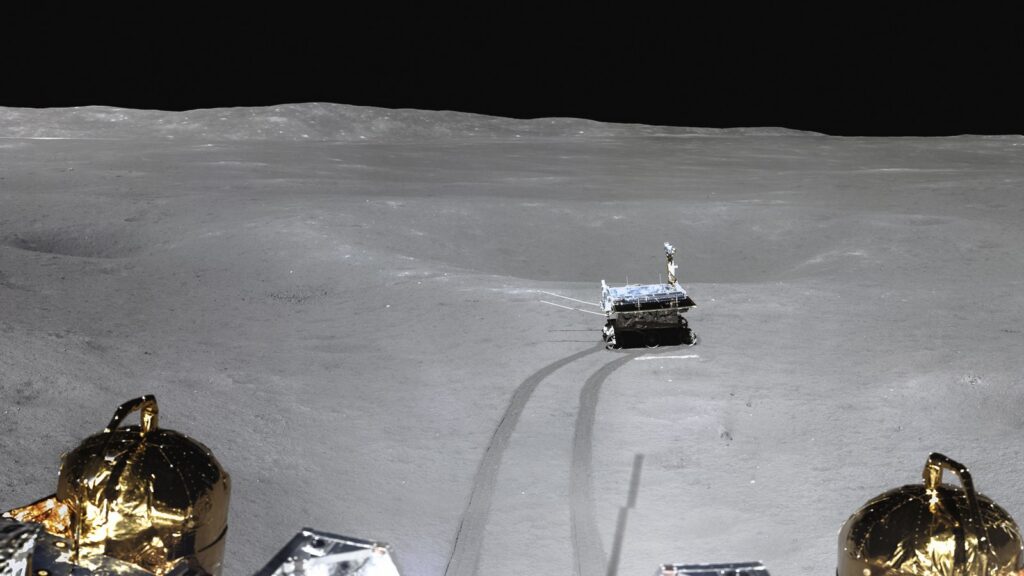
China’s Chang’e-4 landed on the far side in January 2019, the first spacecraft to do so, with a relay satellite behind the Moon to talk to it. Chang’e-6 brought back the first far-side samples in 2024.
LaRouche’s broadcast said the purpose of going was “to acquire knowledge which the human race needed, and could not gain without scientific exploration of our universe in a way which could not be done without traveling far beyond Earth’s orbit.” His scene from 2036 opens with an astronomer on Mars reporting from a radio telescope that “we are at the verge of fundamentally new ideas about how our universe works.”
Diane Sare’s station is a research station first, with a far-side observatory on its schedule.
What It Does to a Country
The commission wrote that “many children and young people today expect and anticipate that they will live and work in space,” and that “such a program can inspire national excellence and challenge young people to pursue careers in science and technology.” It cited what Sputnik did to American schools in 1957.
Most of LaRouche’s broadcast is about this. In his 2036, “every schoolchild, not only in the U.S., Europe, and Japan, but throughout the world, demanded to know everything possible about space”; preschoolers asked for telescopes for Christmas; the physical sciences took over the classrooms; and when the first city went up on Mars in 2027, “nearly everyone on Earth became thus a ‘sidewalk superintendent,’” following the construction. “The passive TV watching of the 20th century had come to an end.”
A country building a station on the Moon needs welders, machinists, physicists, pilots and teachers, and its schools know what to teach for. The commission in 1986 and LaRouche in 1987 made the same forecast: children decide what to become by what they see the country building.
One Station, Not Two
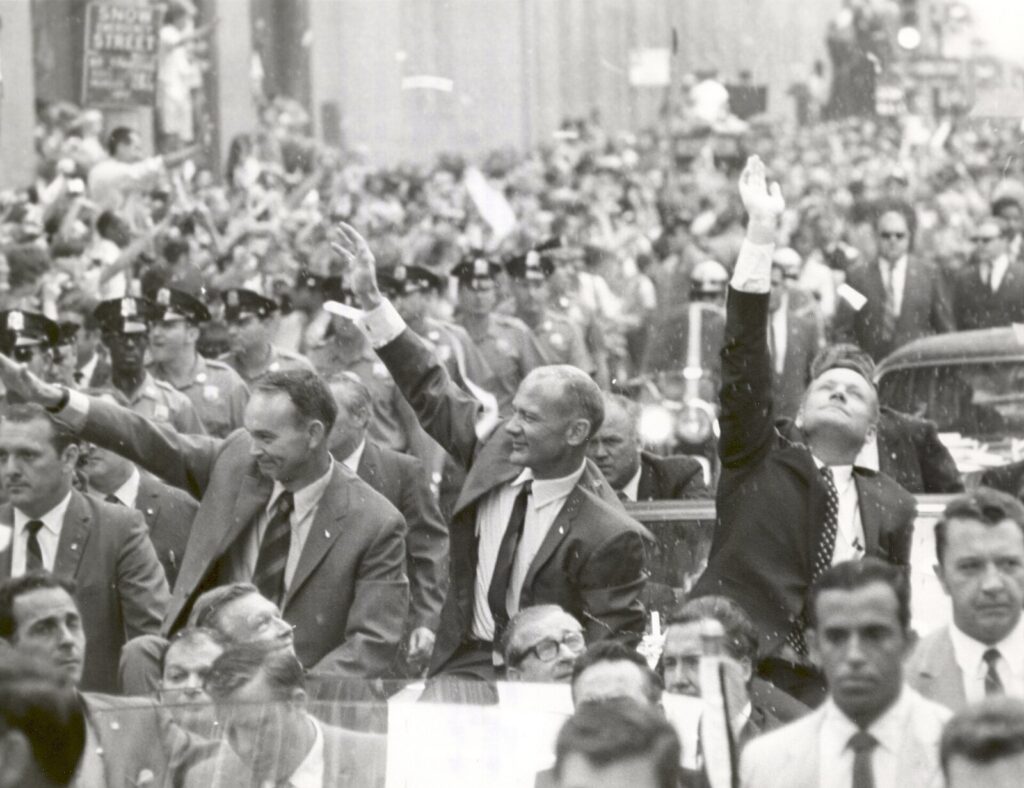
Seventy-six countries have signed the Artemis Accords. Thirteen have joined the International Lunar Research Station. Three, Thailand, Serbia and Senegal, have signed both. India, which has a lander at the south pole, is in the American group; Russia, with sixty years of lunar science, is in the other. What keeps them apart is Section 1340 of the 2011 appropriations act, which forbids NASA to “participate, collaborate, or coordinate bilaterally in any way with China,” and has been renewed every year since.
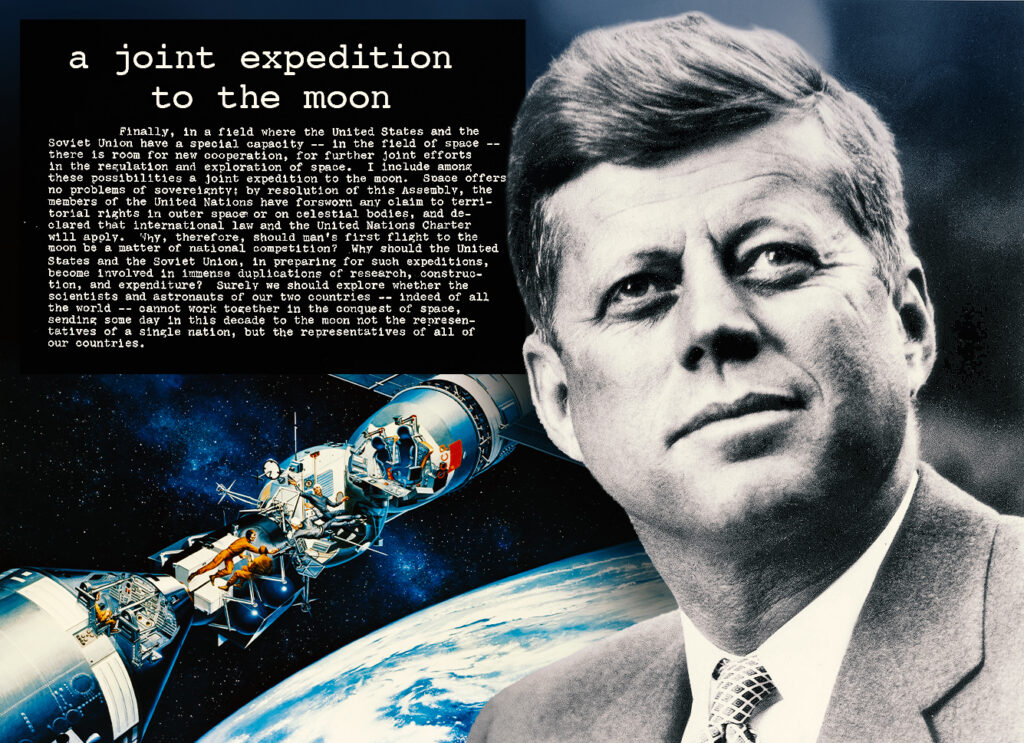
The commission’s declaration had a section headed “Our Hope: Increased World Cooperation” and another, “Our Resolve: To Go Forth ‘In Peace for All Mankind.’” It recommended “vigorous steps be taken to attract other nations to work in partnership with us” and wrote that “all of humankind will benefit from cooperation on the space frontier.” In 1963 President Kennedy proposed at the United Nations that the United States and the Soviet Union go to the Moon together. LaRouche’s 2036 credits the Mars project with the end of general war: the nations building it advanced so fast that “no potential adversary would think of attacking them.”
Diane Sare’s program is one station at the pole, built by both groups, with the 2011 law repealed.
The Decision
The schedule was written in 1986 by the man who ran Apollo, and in 1987 a presidential candidate put a fusion economy under it. The site is the south pole, where both programs are already going. The partners are the seventy-six countries on one list and the thirteen on the other. The commission asked for an “early national decision,” and for forty years no president has made it.
Diane Sare will. A joint research station at the south pole by 2035, built by the ILRS partners and the Artemis partners together. Repeal of the 2011 ban on working with China. NASA restored to one percent of the budget, where it was the last time the country built something new in space. The fusion crash program and the lunar station run as one project.
Gene Cernan, the last man on the Moon, said as he left in 1972 that “we shall return.” That was fifty-four years ago.