Project
Bering Strait Tunnel
Every few years the same headlines appear: A Moscow conference estimates a tunnel under the Bering Strait would cost $65B. A Chinese engineer proposes a line to Seattle. In October 2025, the head of Russia’s sovereign wealth fund offered a “Putin-Trump tunnel” for under $8 billion, and in June 2026 signs a design agreement for it. The story runs for a day and then goes away.
What the stories never say is that one side has been building toward the strait for forty years and the other has barely done anything. Russia began the Amur–Yakutsk Mainline in 1985, ran freight to the Lena in 2014 and passengers in 2019, and is continuing to push forward. But on the other side, the Alaska Railroad reached Fairbanks in 1923 and has been stuck there ever since. The tunnel is the last fifty-six miles of a twenty-five-hundred-mile railway, and the American side of it is empty.
What is the Bering Strait Tunnel?
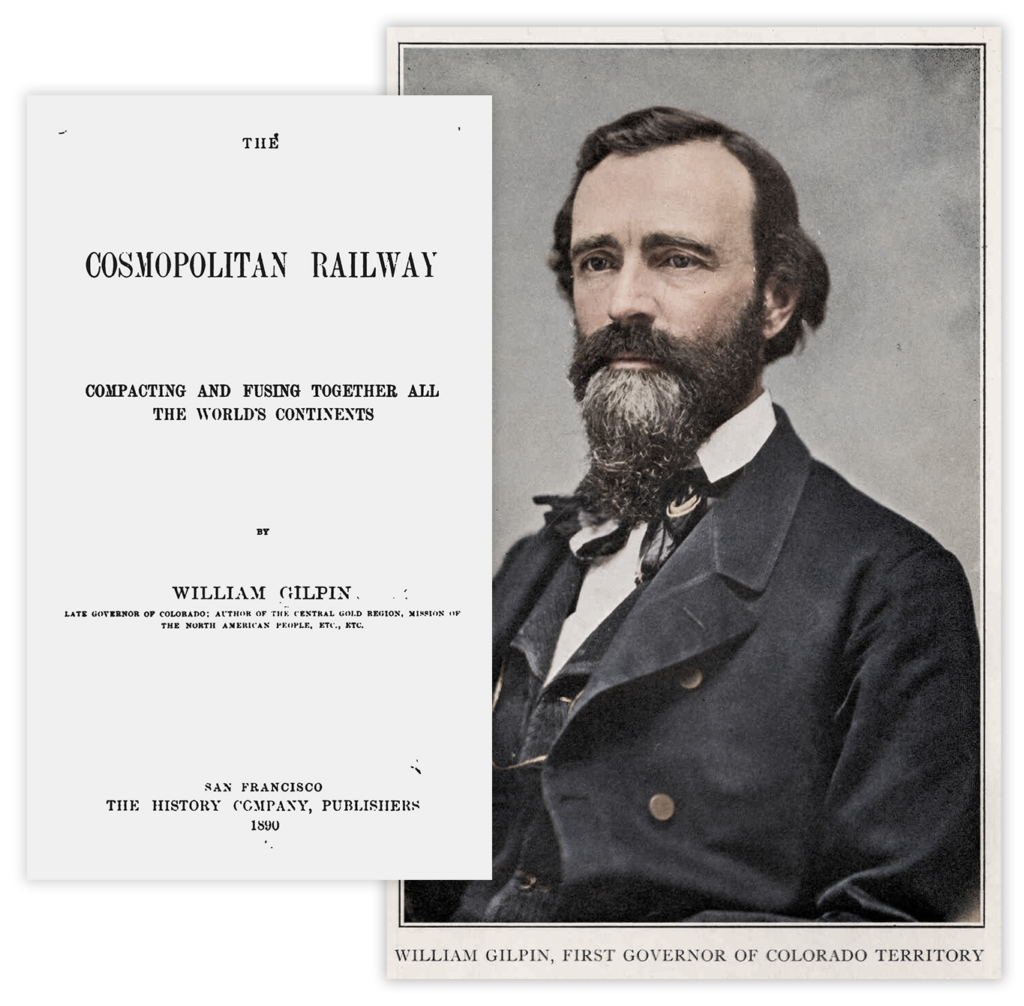
A bored rail tunnel of roughly 60 miles from Russia’s Chukotka coast at Uelen to Wales, Alaska, passing under both Diomede Islands. The water is nowhere deeper than a hundred and sixty-five feet; for comparison, the Channel Tunnel (or Chunnel) is half that length and the Seikan tunnel in Japan runs twice as deep.
On the Russian side, about 1,250 miles of new railway from the Lena to the strait by way of Magadan must be built, extending a line Russian Railways has already built to Yakutsk. New construction on the American side will include about 600 miles of track from Wales to Fairbanks, and the Alaska-to-Alberta line south to the Canadian network at Fort McMurray, from which the existing railways can reach Chicago, Duluth and the Gulf.
The cost claims run from $65 billion for the whole corridor to under $8 billion for the tunnel alone. But the tunnel should not be thought of as a cost, but as the one place on earth where the railways of the Americas and the railways of Eurasia can meet. Join them and a freight car loaded in Chicago can be unloaded in Beijing, Moscow or Berlin without touching a ship. And unlike ocean transport from point A to point B, access to the rail network means value can be added along the way. The economic shape of the entire corridor changes.Every railway that has gone into empty northern regions has filled them. The Alaska Railroad turned Anchorage from a campsite into a city.
The Trans-Siberian moved millions of families east of the Ural Mountains. Six hundred miles of new track is six hundred miles of new towns, mines and ports in an area that has none, and the same on the Russian side from the Lena to the coast. And the ground at both ends is full of what our nation buys abroad: graphite and copper north of Nome and in the Ambler district, copper and gold across the strait in Chukotka. It’s all there, but none of it has a way out.
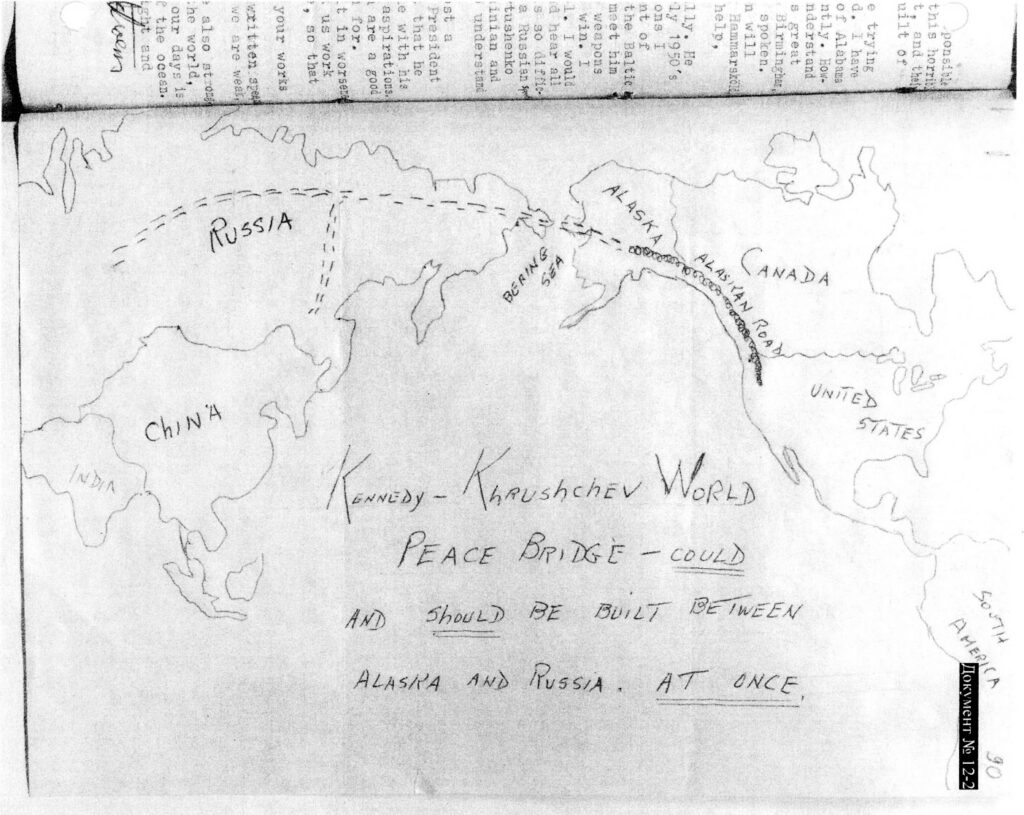
In April of 2007, the Russian Academy of Sciences sponsored a conference in Moscow on the topic. It was addressed by former Alaska governor Walter Hickel, and former American presidential candidate Lyndon LaRouche submitted a paper for the occasion.
And it is American work. The rail will come from Pueblo and Columbia City, the locomotives from Erie and Muncie, and the new lines will be first steps in expanding rail electrification across the continental grid. It is also an example of tripartite cooperation: an infrastructure corridor that three governments could build and own together, as the Alaska–Siberia air route was for three years in the 1940s.
What President Sare Will Do
Our campaign’s rail program calls for 42,000 miles of electrified high-speed track in the United States. The Bering Strait and Alaska-Canada rail connector are our continental priority as the link to Eurasia, funded by a new Bank of the United States established to serve the general welfare not only of our nation, but of humanity. Diane Sare will do it in this order:
On the first day, fill the empty chair. In June 2026, Russia’s sovereign wealth fund signed an agreement with an engineering company to design the tunnel, and its head, Kirill Dmitriev, said it was signed “not with American officials.” President Sare will give the American answer. She will direct her Secretaries of State and Transportation to propose a Bering Strait treaty to Russia and Canada: one corridor, three governments. It would be built the way the St. Lawrence Seaway was built by treaty with Canada and opened in five years, and the way the Alaska Highway was built by agreement with Canada in a single season in 1942.
In the first year, pay for the study. In 2007 a two-year feasibility study of the whole corridor was priced at $120 million. Nineteen years have passed without anybody paying for it, so every cost figure is a rough estimate. President Sare will commission the study with Russia and Canada, and publish the results.
In the first budget, build the American half. The Bank of the United States will fund four things. Rails on the Port MacKenzie embankment, 32 miles of finished railbed that has had no track since 2015. The three remaining phases of the Northern Rail Extension to Delta Junction, where the Tanana River bridge was finished in 2014 and nothing was built on either side of it. A federal railway from Fairbanks to Wales, the Alaska Railroad was federally owned from 1914 to 1985. And the Alaska-to-Alberta line, taken over under a federal charter before its presidential permit runs out in 2030.
Build it with Russia and China. Russia’s side is under construction. China’s railways already connect to the Trans-Siberian. The treaty would bring joint access to the corridor. The line exists to carry freight between Chicago, Yakutsk and Beijing, starting with the Far Eastern cargo Russia is now shipping on the Northern Sea Route.
The rest of this page is the history: the Czar’s yes in 1906 and no in 1907, what got built, what stopped, and which headlines were wrong.
The last fifty-six miles
From Cape Dezhnev to Cape Prince of Wales is fifty-six miles. The Channel Tunnel is thirty-one. The Bering Strait is shallow, under a hundred and sixty-five feet across the whole crossing, with two islands in the middle that a tunnel can use for shafts. The Seikan tunnel in Japan runs under water nearly three hundred feet deeper than this.
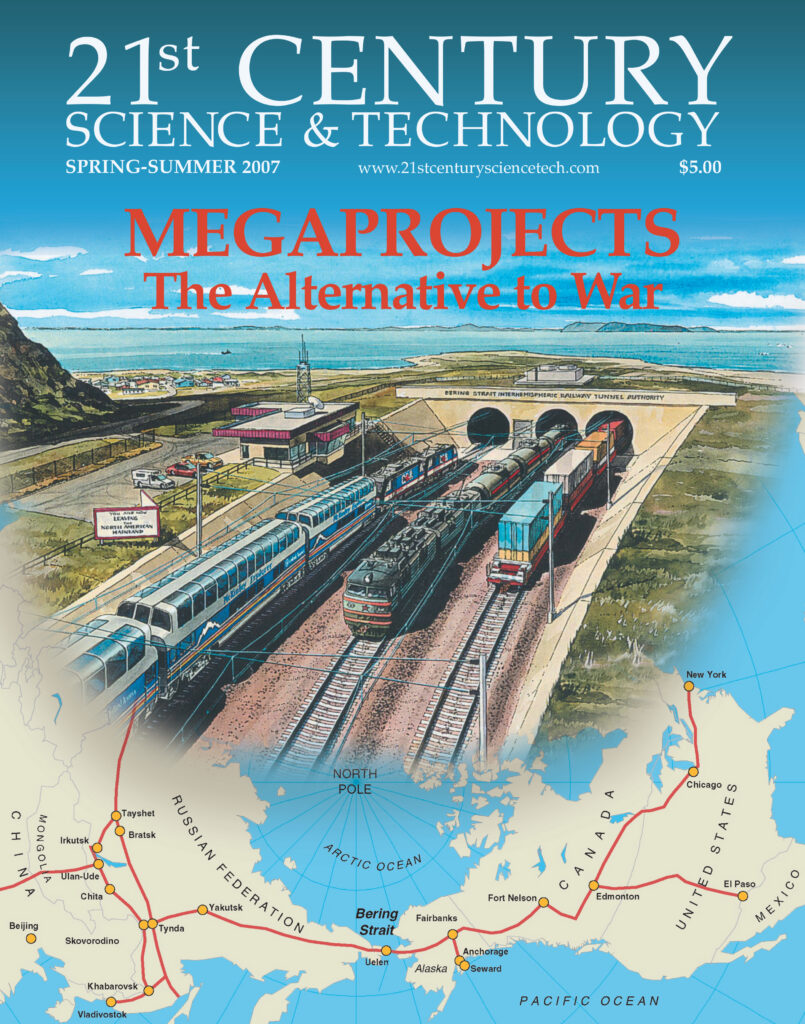
The difficulty was never the strait. It is what lies on either side of it: about twelve hundred and fifty miles of Russia with no railway between the Lena and the Pacific coast, and about six hundred miles of Alaska between Fairbanks and the sea. The tunnel is the last fifty-six miles of a twenty-five-hundred-mile railway. Every serious proposal since 1890 has been a proposal to build the railway.
The American Idea, 1890
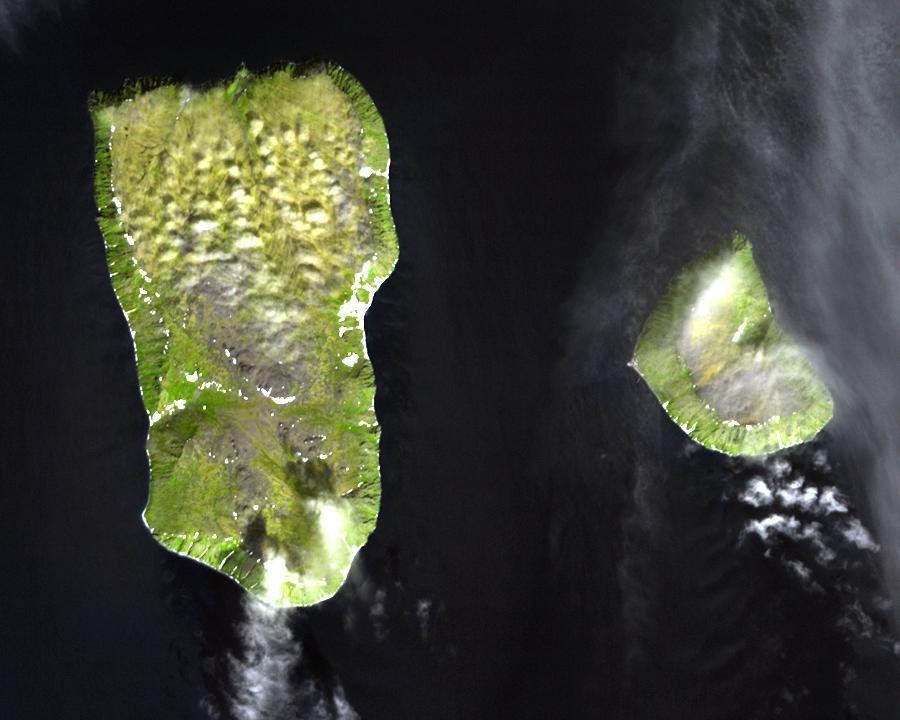
William Gilpin, the first governor of Colorado, published the plan in 1890 as The Cosmopolitan Railway. The line “should not only traverse the continent from sea to sea, but should continue its course north and west across the strait of Bering; and across Siberia, to connect with the railways of Europe, and of all the world.” Russia laid the first rail of the Trans-Siberian the next year. Gilpin wrote that “the several systems in America are drawing nearer and nearer toward the narrow strait which separates the oldest continent known to history from the so-called newest continent.”
He knew what a railroad does to a place. Denver was a mining camp when he arrived as governor in 1861 and a city of 106,000 when the book came out. In 1906 the Tsar’s council approved an American syndicate’s version of the plan; in 1907 it reversed itself. No government has taken it up since.
The Strait Was a Bridge Once
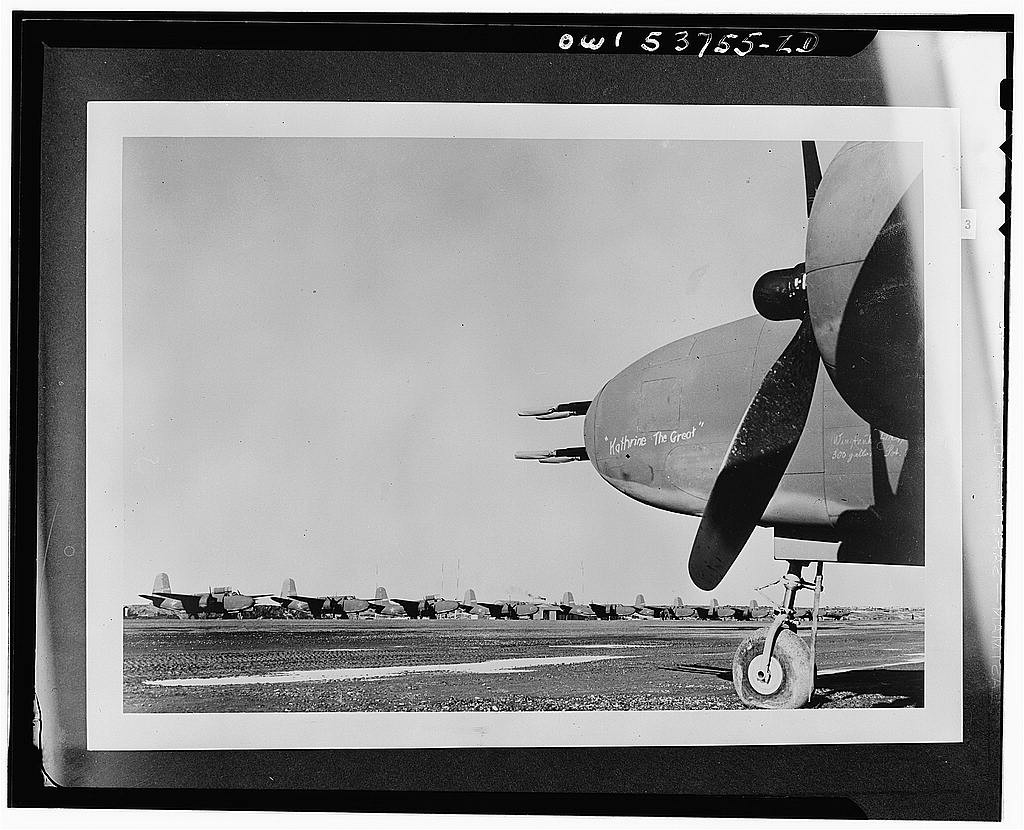
From September 1942 to September 1945 the United States and the Soviet Union ran one air route across the Bering Strait. American pilots flew new warplanes from Great Falls, Montana to Ladd Field at Fairbanks. Soviet crews took them on through Nome, across the strait to Uelkal, and on to Yakutsk and Krasnoyarsk, 3,500 miles to the front. 7,930 aircraft went over, and for three years Soviet and American airmen lived and worked on the same field at Fairbanks.
The Alaska Highway was built the same year. The United States and Canada agreed on it in March 1942; trucks were driving its 1,700 miles to Fairbanks in November. The memorial at Fairbanks shows an American and a Soviet pilot under one propeller, with Roosevelt’s words to Congress from March 1945 on the stone: a peace that “rests on the cooperative effort of the whole world.”
Russia Built Its Half
Russia started the Amur-Yakutsk Mainline in 1985, stopped when the Soviet Union collapsed, and restarted it by government order in 2004. Trains reached Tommot that August. The golden spike at Nizhny Bestyakh, across the Lena from Yakutsk, was driven in November 2011; freight began running in 2014 and passengers in 2019. That is five hundred miles of new railroad built on permafrost. A three-mile bridge over the Lena is under construction, with orders from the president to finish it by 2028, and the next 1,160 miles to Magadan are in the national rail strategy without money attached.
The Alaska Railroad has ended at Fairbanks since President Harding drove its golden spike at Nenana on July 15, 1923. Since then the state has started three extensions and finished none. At Port MacKenzie, 32 miles of embankment have had no track and no funding since 2015. The Northern Rail Extension to Delta Junction got its bridge over the Tanana in 2014 and nothing after that. The Alaska-to-Alberta Railway got a presidential permit in September 2020, lost its lender in April 2021, had its shares cancelled that December, and loses the permit in 2030 if nothing is built at the border.
What It Opens in Alaska
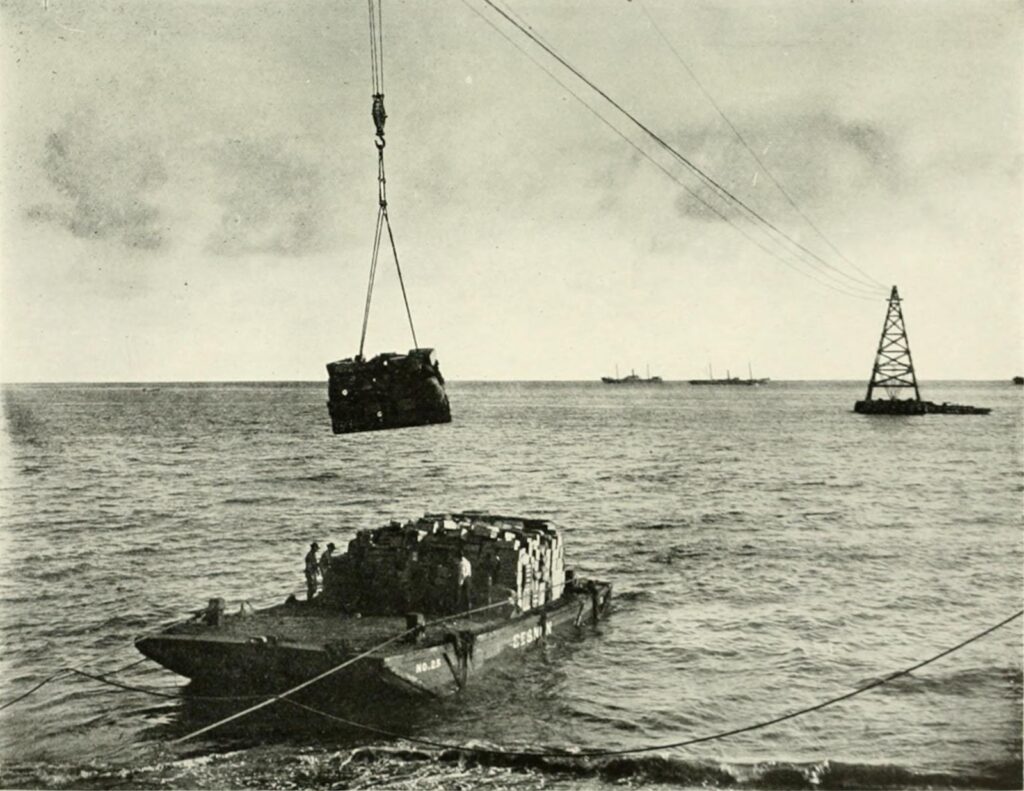
Nome has no road to the rest of Alaska and no railroad. Its fuel and most of its food come by barge in the months the Bering Sea is open. In 2025 gasoline in Nome was $6.75 a gallon and heating oil $6.82. In January 2012, after the last barge of the season was turned back by ice, a Russian tanker delivered the town’s fuel behind a Coast Guard icebreaker. In 1910 cargo was lightered across the beach because Nome had no dock; the first deep-water dock is being built now.
The Interior has the same problem. The 211-mile Ambler road, approved in October 2025, is being built because the copper, zinc and cobalt at the end of it have no other way out. The graphite north of Nome will ship through the new port. The campaign’s rail program: “There is no rail connection between Alaska, Canada’s northern territories, and the rest of the continent.” The railroad from Fairbanks to the strait goes through that country, and it gets built first, before any tunnel. Once it runs, fuel and ore move at rail rates, all year.
The Arctic coast
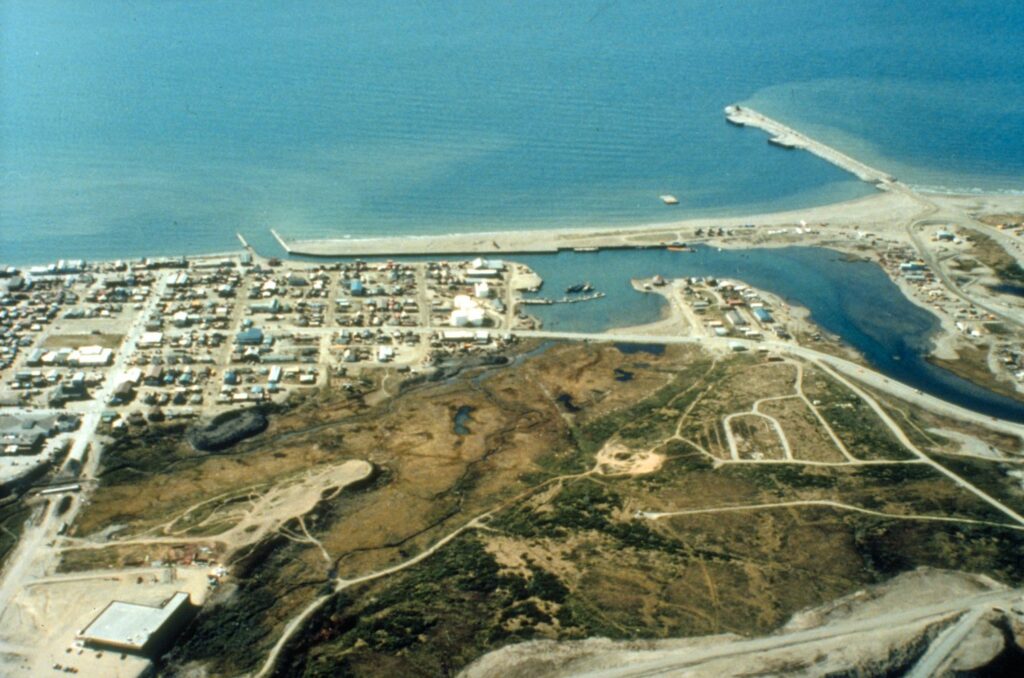
In August 2025 the Army Corps of Engineers signed a $399 million contract for the first phase of the first deep-draft port in the American Arctic, at Nome: a 1,200-foot causeway extension, 600 feet of new dock and a 40-foot basin. Work in the water starts in the summer of 2026 and finishes in 2029. The Coast Guard has two polar icebreakers, one of them commissioned in 1976, and a third converted from a commercial ship in 2025. Russia has eight nuclear icebreakers at sea, 34 diesel icebreakers in its ports, and a Northern Sea Route that carried 37.9 million tons in 2024.
The major ports of the lower 48 all have railroads behind them. Nome will not, until the corridor is built. With it, the United States has an Arctic port it can reach by land.
What It Opens for America
A freight car can run from Chicago to Beijing. The American and Canadian railroads already reach Fort McMurray. The Trans-Siberian already reaches Yakutsk, and China’s railroads already connect to the Trans-Siberian. The corridor closes the 2,500 miles between them. At the strait the cars are lifted onto wider Russian wheel sets, the same change every train between China and Russia makes today.
Ships will keep carrying the containers; the transpacific trade was 30 million of them in 2024 and the railroad is not built for that. It is built for freight that has no port: ore, timber and gas from the Yukon and the Interior, gold, coal and copper from Chukotka and Yakutia, and anything that cannot spend three weeks at sea. Building it is itself an order for American mills. Twenty-five hundred miles of track takes about half a million tons of rail, which is rolled today at Columbia City, Indiana and Pueblo, Colorado, and locomotives, which are built at Erie and Muncie. The campaign’s program is 42,000 miles of electrified railroad. This is the first order placed for it, and the part that connects it to Asia.
The Decision
On October 17, 2025 the head of the Russian Direct Investment Fund proposed the tunnel to the two presidents by name. On June 5, 2026 he signed a design agreement for it at the St. Petersburg forum with an engineering company he did not name, “not with American officials.” No one from the United States was there.
President Sare will send someone. She will propose a Bering Strait treaty to Russia and Canada, built the way the St. Lawrence Seaway was built. She will pay for the study, jointly, and publish it. She will charter a federal railroad from Fairbanks to Wales, as the Alaska Railroad was federal for seventy years, and take over the Alaska-to-Alberta line before its permit expires in 2030. The last president to drive a spike on an Alaska railroad was Harding, at Nenana, in 1923.