Project
The Fusion Crash Program
The stories about electricity run every week. The bill goes up. A data center asks for as much power as a city. The utility asks households to run the dishwasher after nine. All of them are about splitting a supply that isn’t growing, and the only answers offered are about who gets cut first.
The way out isn’t to divide the pie more fairly; it is to greatly expand supply. How? Nuclear fusion, harnessing the power of the process that powers the sun.
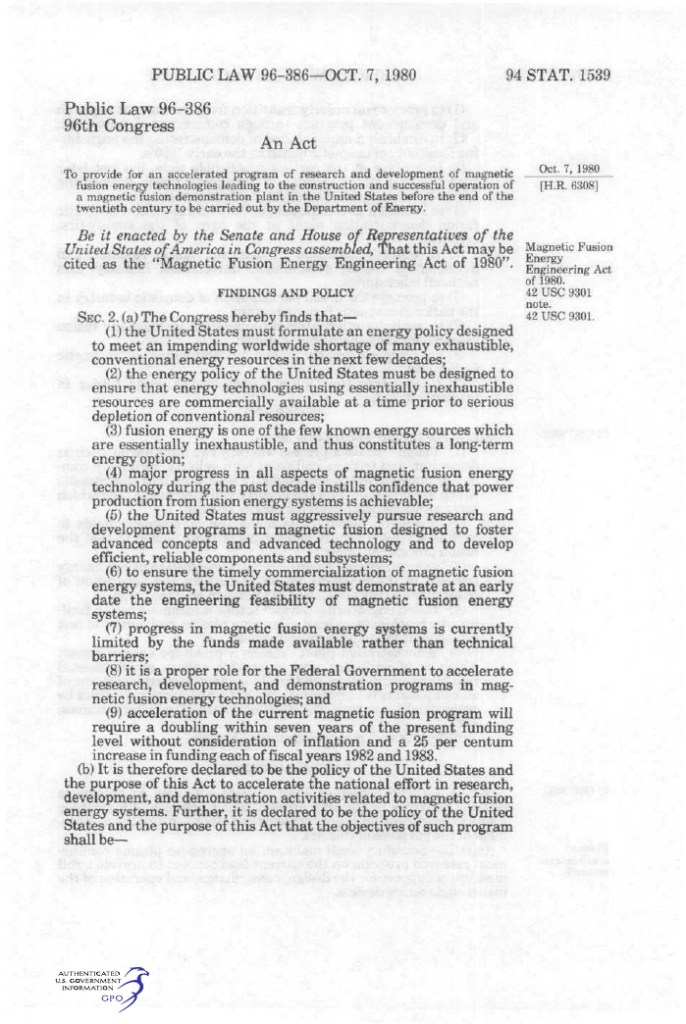
The United States wrote a plan to achieve commercial fusion power. That plan was made law in 1980, and then Congress never paid for it. Diane Sare’s program is to carry it out.
What Is Fusion?
The Sun produces energy by fusing hydrogen atoms. The process releases no carbon and no long-lived radioactive waste, and a small amount of fuel yields enough energy to power a city for years. One fuel, deuterium, comes from seawater, and there is enough of it on Earth to power civilization for billions of years.
Ignition has been achieved in California, and machines in China and Massachusetts are approaching net energy. The power plant has not yet been built.
What President Sare Will Do
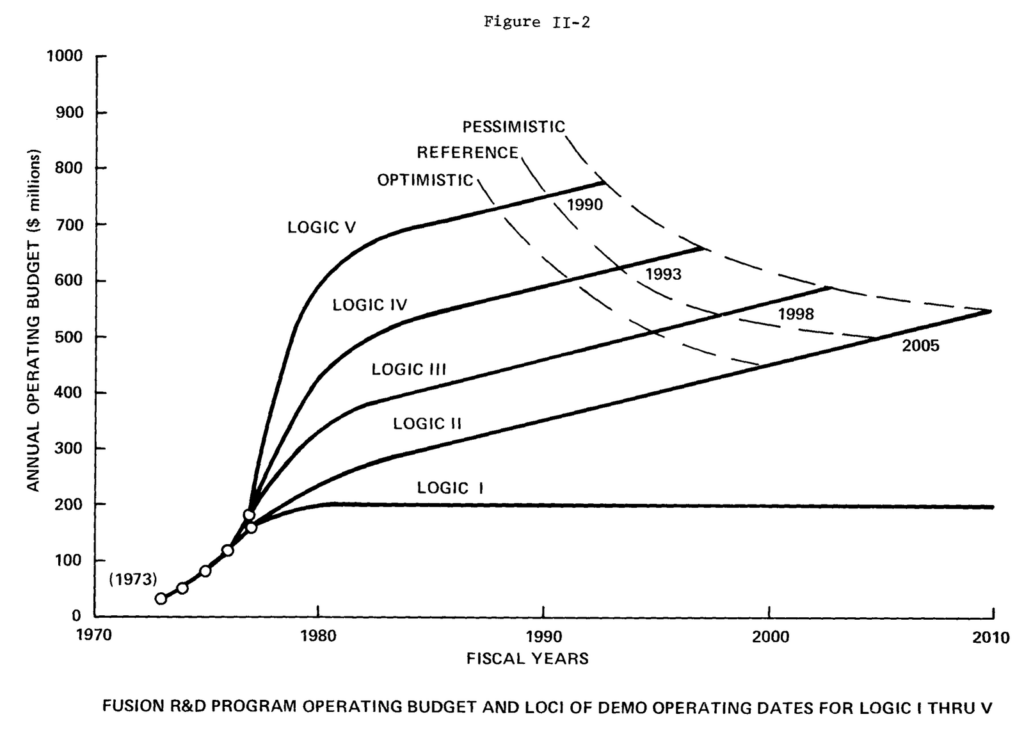
In 1976 the Energy Research and Development Administration priced five schedules for fusion. The fastest, Logic V, put a demonstration power plant on the grid in 1990 for $20 billion in 1978 dollars. A law to achieve this was introduced by Rep. Mike McCormack (D-WA) and passed by Congress in 1980.
Congress only appropriated a fraction of the funding needed for the law, but it was never repealed. It is still in the United States Code, and it still orders the Secretary of Energy to “initiate design activities on a fusion engineering device” and to begin “each activity which he deems necessary” for a demonstration plant. Diane Sare will make it happen.
On the first day, enforce the law. President Sare will direct her Secretary of Energy to do what the 1980 Act already requires: begin the design of the fusion engineering device in the first year, prepare the program plan and the siting list for a national fusion engineering center that the Act also calls for, and name the site. The demonstration plant follows on the interval the 1976 plan set for itself: fourteen years from the first full appropriation.
In the first budget, pay for it. Her first budget request to Congress will carry fusion at the Logic V level. In today’s dollars that is about $79 billion over thirteen years, roughly $6 billion a year, against the $790 million in federal funds the program gets now. In the first week she will send Congress the America’s 250th Birthday General Welfare Act, which charters a Bank of the United States inside the Federal Reserve with up to $2 trillion in capital and names “the development of nuclear fusion technologies” among the projects it exists to lend for. The plant is financed as credit issued through that bank, rather than depending on a research line item that an appropriations subcommittee reconsiders every year.
In the first year, invite the world. President Sare will propose to China a joint fusion program, on the model of the protocol Washington and Moscow signed in 1973, and open it to other partners. The 1980 Act lists “international cooperation in magnetic fusion research for the benefit of all nations” among its purposes. International fusion cooperation began in Geneva in 1958, and every large advance since has crossed a border.
Order the fleet it belongs to. The campaign’s economic program calls for 200 new nuclear fission plants and more than 40 nuclear desalination plants. She will start with the 80 sites on the map below, where the country ordered reactors once already and then cancelled them.
Put it to work. The campaign’s other projects run on it. A NASA program for a manned colony on Mars within thirty years is a fusion program. So are the pumping stations of the North American Water and Power Alliance (NAWAPA) and the 40 desalination plants.
The rest of this page is the record: who wrote the plan, who voted for it, who cut it, and who said fusion was dangerous.
What Happened
The fusion plan was written for a country that was building reactors. In 1974 the Atomic Energy Commission expected the United States to have 850 to 1,400 gigawatts of nuclear power by the year 2000, and the utilities had placed the orders to begin it. After the 1973 oil embargo electricity demand grew at a third of its old pace, interest rates reached 21.5%, a plant that had taken seven years to build took eleven, and in April 1977 the Carter administration deferred the breeder reactor and reprocessing indefinitely and told the country that “conservation is the quickest, cheapest, most practical source of energy.” A country that had decided it did not need the power it had already ordered did not need the next kind of power either, and the fusion budget, in real dollars, has never again been what it was in 1977.
The map below is that decision drawn on the country: every reactor that was ordered and then cancelled, over the ones that were built.
What Fusion Changes
A fusion plant makes more than electricity. The 1980 Act defined a fusion “energy system” as a plant for “the generation of electricity and the production of hydrogen or other fuels,” because the people who wrote it expected the heat to make fuel as well as power. In 1969 two physicists at the Atomic Energy Commission, Bernard Eastlund and William Gough, described the fusion torch: the plasma that leaks from a reactor, at tens of millions of degrees, breaks any material fed into it down to its elements, so scrap, slag and seawater come out as raw metals and the country no longer depends on the mine. The campaign’s economic program puts 40 nuclear desalination plants on the coasts and NAWAPA’s water over the Rockies. Both are machines for turning energy into water, and fusion is the energy with no fuel to buy.
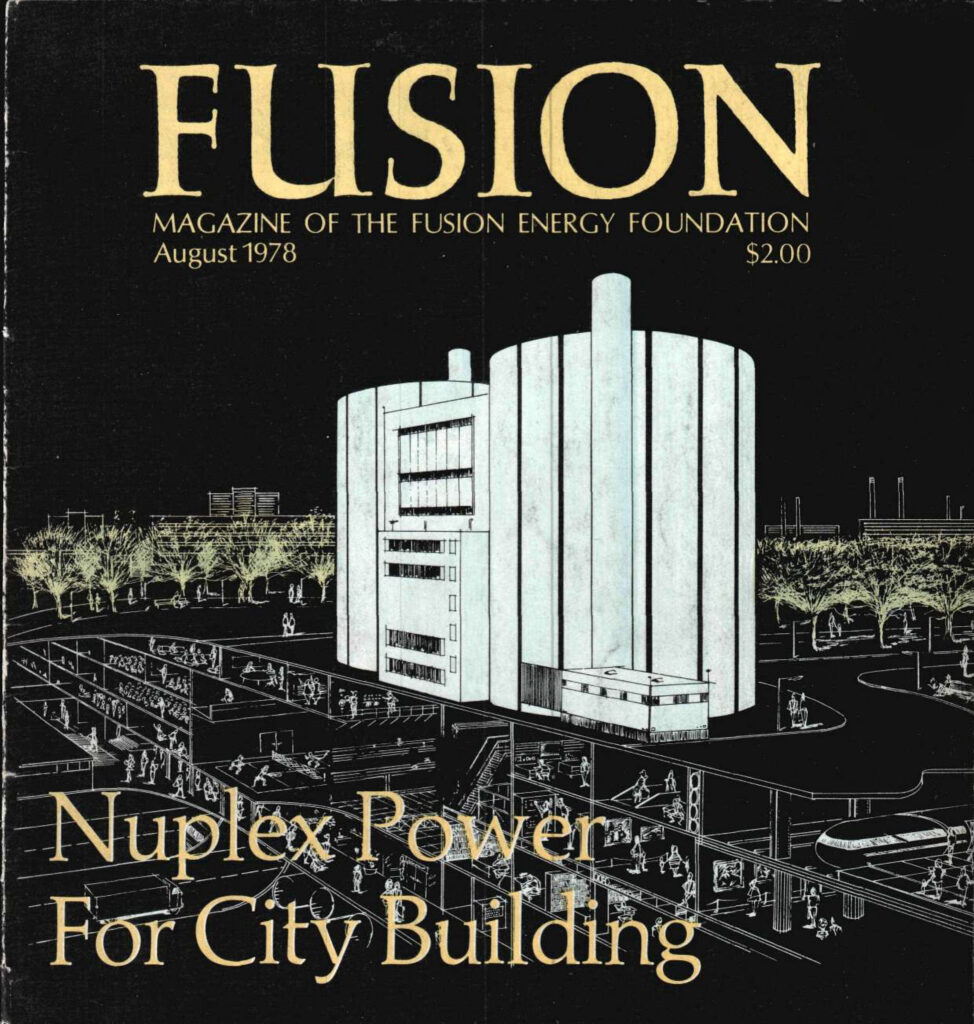
The Fusion Energy Foundation, founded by Lyndon LaRouche, drew the city that follows in 1978: the nuplex, a reactor at the center of a new town with the industries that use its heat built around it. That drawing is the plan behind the campaign’s 200 plants.
A Story of International Scientific Cooperation
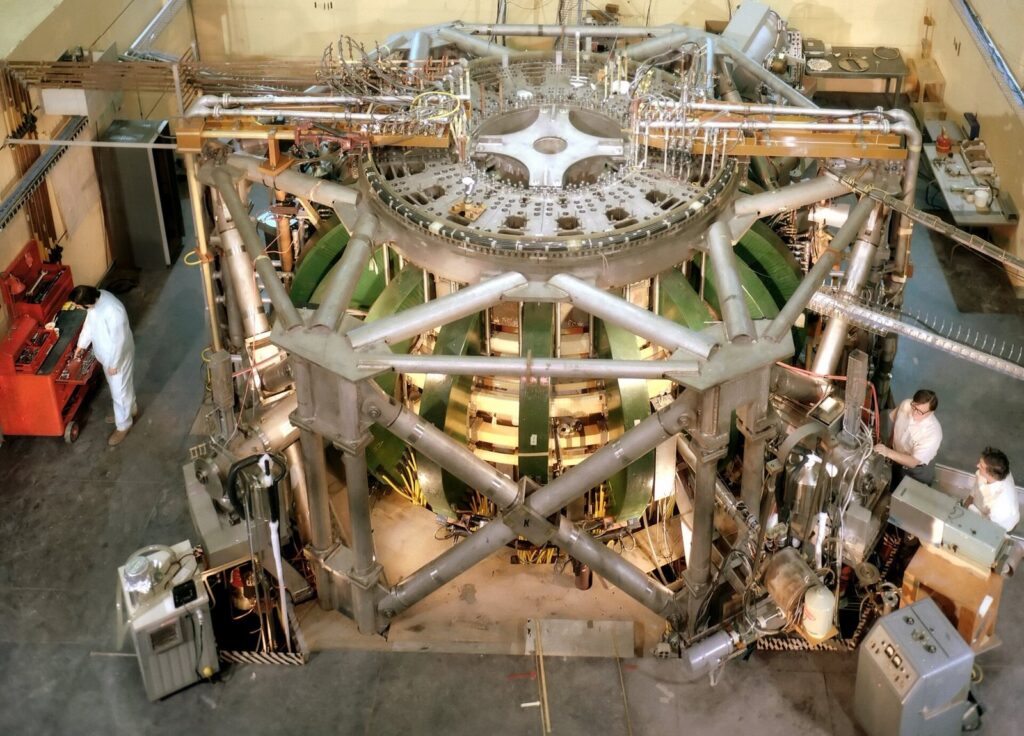
In 1956 Igor Kurchatov and Lev Artsimovich declassified Soviet magnetic fusion research on their own initiative. Lewis Strauss declassified the American program for the 1958 Geneva conference. In 1968 the Soviet T-3 tokamak reported temperatures Western laboratories doubted; a British team flew to Moscow with its lasers, confirmed them in 1969, and laboratories everywhere rebuilt around the Russian design. In 1973 Washington and Moscow signed a protocol for joint fusion projects. The Princeton Large Torus reached 60 million degrees in August 1978, above the temperature a reactor needs, and the Tokamak Fusion Test Reactor lit its first plasma on Christmas Eve 1982.
The work continues in every major country. China’s EAST tokamak held a plasma for 1,066 seconds in January 2025, and China is building BEST, due in 2027, toward a demonstration reactor in the 2030s. ITER in France is being built by 35 nations, the United States, China, Russia and India among them, with research operation now set for 2034. Livermore reached ignition in December 2022, and SPARC in Massachusetts aims at net energy in 2027. The science has always crossed borders. The American program to build a plant has not been funded since 1977.
The Plan, Circa 1976
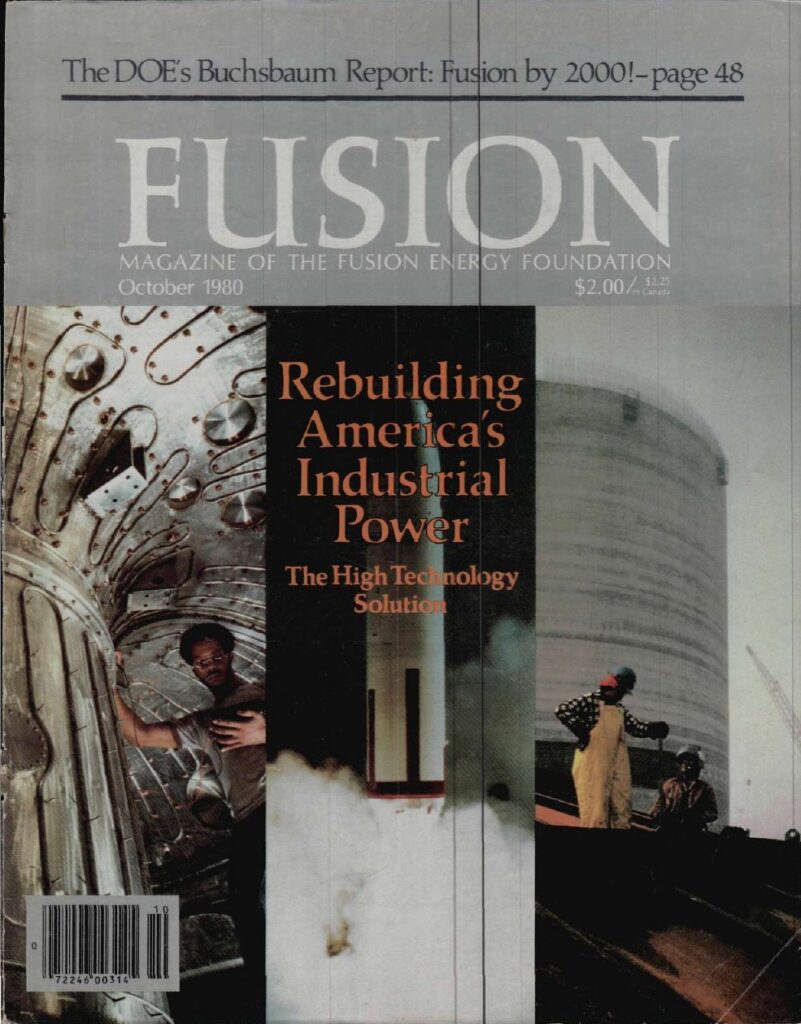
In July 1976 the federal government priced fusion on five schedules. Logic V, “maximum effective effort,” put a demonstration reactor in operation in 1990 for $20.1 billion in 1978 dollars. Logic III, the reference case, 1998. Logic I, “level of effort research,” got one sentence: “If this pace were continued, a practical fusion power system might never be built.” The plan said the choice between them was not scientific but a matter of “pessimism” or “optimism” about funding. On August 26, 1980 the House passed the Magnetic Fusion Energy Engineering Act 365 to 7, the Senate passed it without a dissenting vote, and the President signed it on October 7. It found that the program needed “a doubling within seven years of the present funding level.” The Fusion Energy Foundation, which had campaigned for it for six years, called it “a great day for America.”
The money was never appropriated. Between 1978 and 1998 Congress paid 31 percent of the reference path. In December 1981 Edwin Kintner, who ran the program, resigned over the cuts, calling them “a national error for which a price far greater than present savings will be paid at some future date.” In 1996 the budget was cut by a third and TFTR shut down the next year. In 2016 MIT’s Alcator C-Mod set the world record for plasma pressure on its last day of operation; the Department of Energy had stopped paying for it. The Foundation was gone by then. Federal prosecutors forced it into bankruptcy in April 1987, and the judge who dismissed the case in 1989 found the government had misled the court.
The Opposition
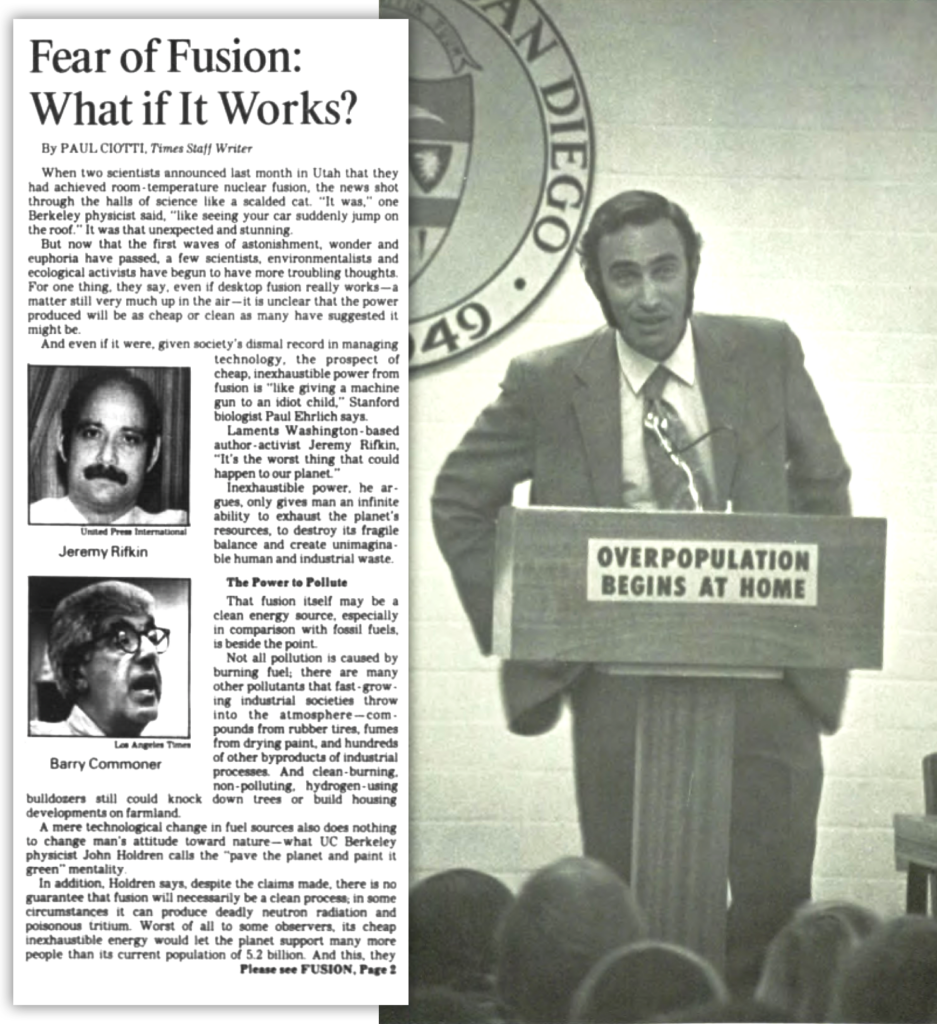
On April 19, 1989, a month after two scientists announced room-temperature fusion in Utah, the Los Angeles Times ran a story under the headline “Fear of Fusion: What If It Works?”
Paul Ehrlich, the Stanford biologist who wrote The Population Bomb, said cheap, inexhaustible fusion power would be “like giving a machine gun to an idiot child.” Jeremy Rifkin said, “It’s the worst thing that could happen to our planet,” because unlimited power would give man an unlimited ability to use up the planet’s resources. John Holdren, later President Obama’s science adviser, warned of a “pave the planet and paint it green” mentality. Berkeley anthropologist Laura Nader said “many people just assume that cheaper, more abundant energy will mean that mankind is better off, and there is no evidence for that.”
They were afraid it would work. That view, that abundant energy is dangerous and that growth has limits, has run American energy policy for fifty years. This campaign rejects it. The purpose of an economy is to give each generation more productive power than the last: wood gave way to coal, coal to oil, oil to fission, and fusion is the next step.
What It Opens for the Grid
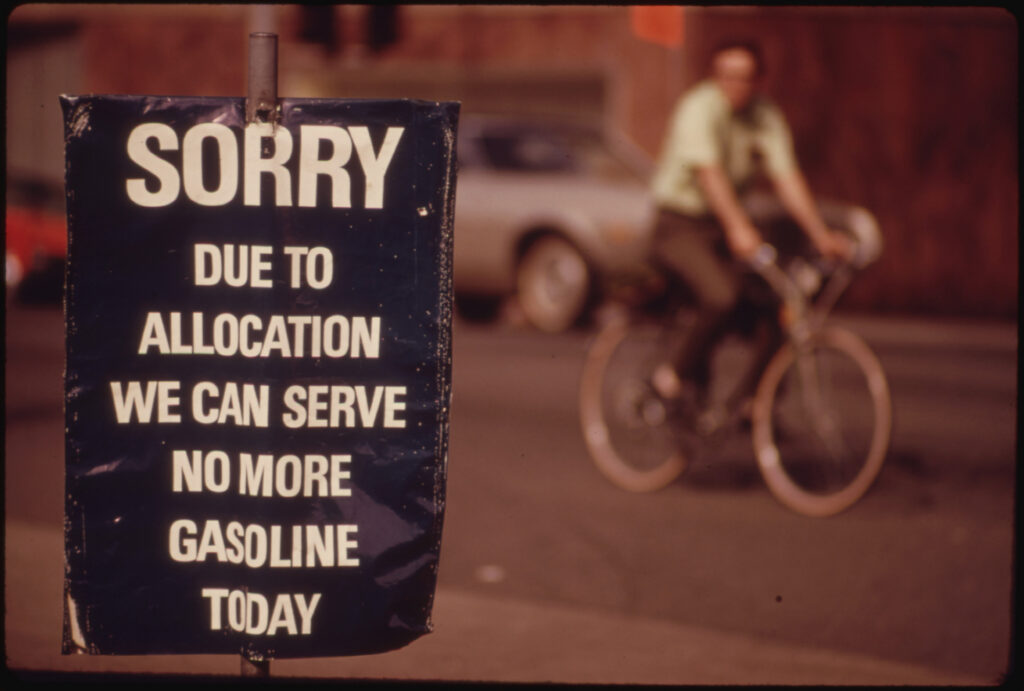
The argument about electricity in America is an argument about scarcity. The average household price is about a third higher than in 2020: 13.2 cents a kilowatt-hour then, about 17.5 now. Data centers used 4.4 percent of the country’s electricity in 2023, and the Energy Department’s own laboratory expects 6.7 to 12 percent by 2028. Every utility plan now decides who waits.
Fusion ends that argument. The fuel is deuterium from seawater, a few hundred pounds a year for a plant that supplies a city, so the price of a kilowatt-hour is the price of the plant and the people who run it, and it does not move with a war, a pipeline or a drought. The campaign’s 200 fission plants carry the grid for the years it takes to get there; the fusion plant is what the industry that builds them is being built to build. The economic program: the crash program “will drive the process of innovation and transform the power of the American worker.”
What It Opens for the Rust Belt
A fusion plant is a nuclear plant with a different core. The forgings, the steel, the welders and the licensing are the same, and America let that base go. In the 1970s U.S. Steel and Bethlehem Steel ran 8,000-ton presses that could handle 300-ton ingots. Those presses are gone. A modern reactor vessel starts from a 600-ton ingot, and the presses that can take one are in Japan, Korea and China. Westinghouse announced in July 2025 that ten AP1000 reactors would begin construction by 2030, and its own study puts the construction phase at $92.8 billion in GDP. The campaign’s program is 200, and the fusion plant after them.
The closed auto plants of Michigan, Ohio and Indiana are the manufacturing base for that buildout. In early 1942, on Roosevelt’s order, General Motors stopped making cars and its divisions built more than 47,000 Allison aircraft engines; one government-owned plant at Tonawanda, New York built 64,000 more. The same conversion is possible now. What it needs is the decision and the credit, and the Bank of the United States in the campaign’s General Welfare Act is the credit.
What It Opens Beyond Earth
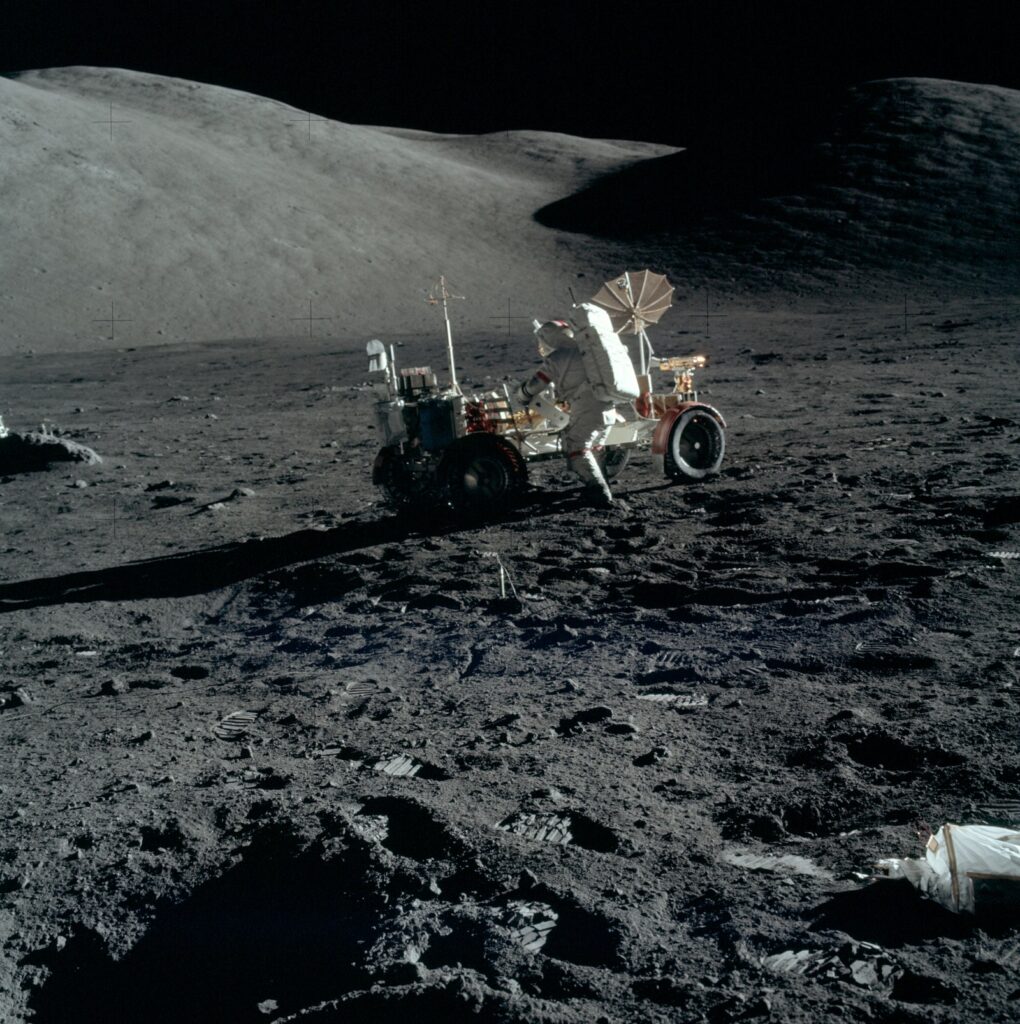
The campaign’s space program is a fusion program. The economic platform puts a manned colony on Mars within thirty years under NASA, with fusion as “a critical component” of it. A chemical rocket takes seven to nine months to reach Mars and then waits there for the planets to line up for the trip home. A fusion rocket of the kind Princeton engineers have designed on paper since 2014, the Direct Fusion Drive, makes the trip in about four months and arrives with megawatts of power to run the base.
The Moon is the fuel supply. Its soil holds helium-3, deposited by the solar wind over four billion years. Fused with deuterium it gives off almost no neutrons, so the reactor does not become radioactive and its energy can be converted to electricity directly. Twenty-five tons of it, the volume of one Shuttle cargo bay, would have supplied all the electricity the United States used in 1991. The station on this site’s International Lunar Research Station page is where that fuel is mined.
The Decision
On October 7, 1980 President Carter signed the Magnetic Fusion Energy Engineering Act without a ceremony. His diary for the day shows the arrival of the president of Nigeria, a campaign lunch, and a helicopter to Virginia to sign a mental health bill in front of the cameras. The fusion act, passed 365 to 7, got a written statement. The law was never repealed. It still orders the Secretary of Energy to begin the design of a fusion engineering device and the work for a demonstration plant. No president has done it.
In September 1963 President Kennedy told the United Nations that the United States and the Soviet Union could go to the Moon together. The same offer is open on fusion, and the law to act on it has been signed for forty-six years. President Sare will enforce it on the first day, fund it in the first budget, and build the plant with the countries whose laboratories made the science work.